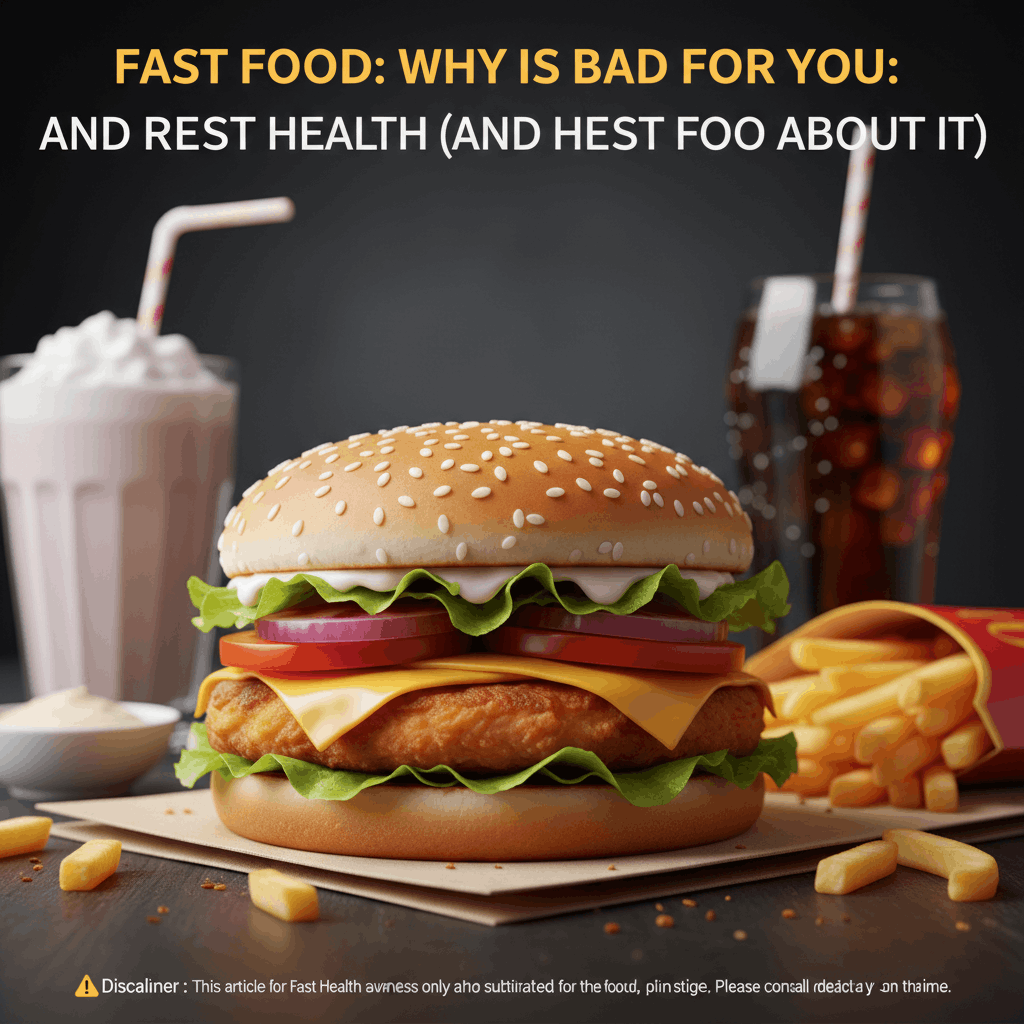
Let’s be real for a second—who doesn’t love a juicy burger, a slice of cheesy pizza, or a bag of salty, golden fries? In our fast-paced lives, fast food feels like a lifesaver. You’re running late for work, you have zero energy to cook, and there’s a drive-thru right around the corner. It’s quick, it tastes amazing, and it fills you up instantly.
But have you ever stopped to think about what that “quick fix” is doing to your body inside? While it’s fine as an occasional treat, making it a regular habit is like putting the wrong fuel in a high-performance car. Eventually, things start to break down.
In this post, I want to chat with you about why fast food is so tough on our health and why it’s worth making a few small changes for your future self.
What Exactly Counts as Fast Food?
Before we get into the “why,” let’s look at the “what.” When we talk about fast food, we’re talking about food that is:
- Mass-produced and served very quickly.
- Highly processed (meaning it’s far from its natural state).
- Loaded with extra oil, salt, sugar, and preservatives.
Whether it’s fried chicken, soft drinks, or those tempting donuts, most fast food shares the same problem: it’s designed to taste addictive, not to nourish you.
1. The “Empty Calorie” Trap
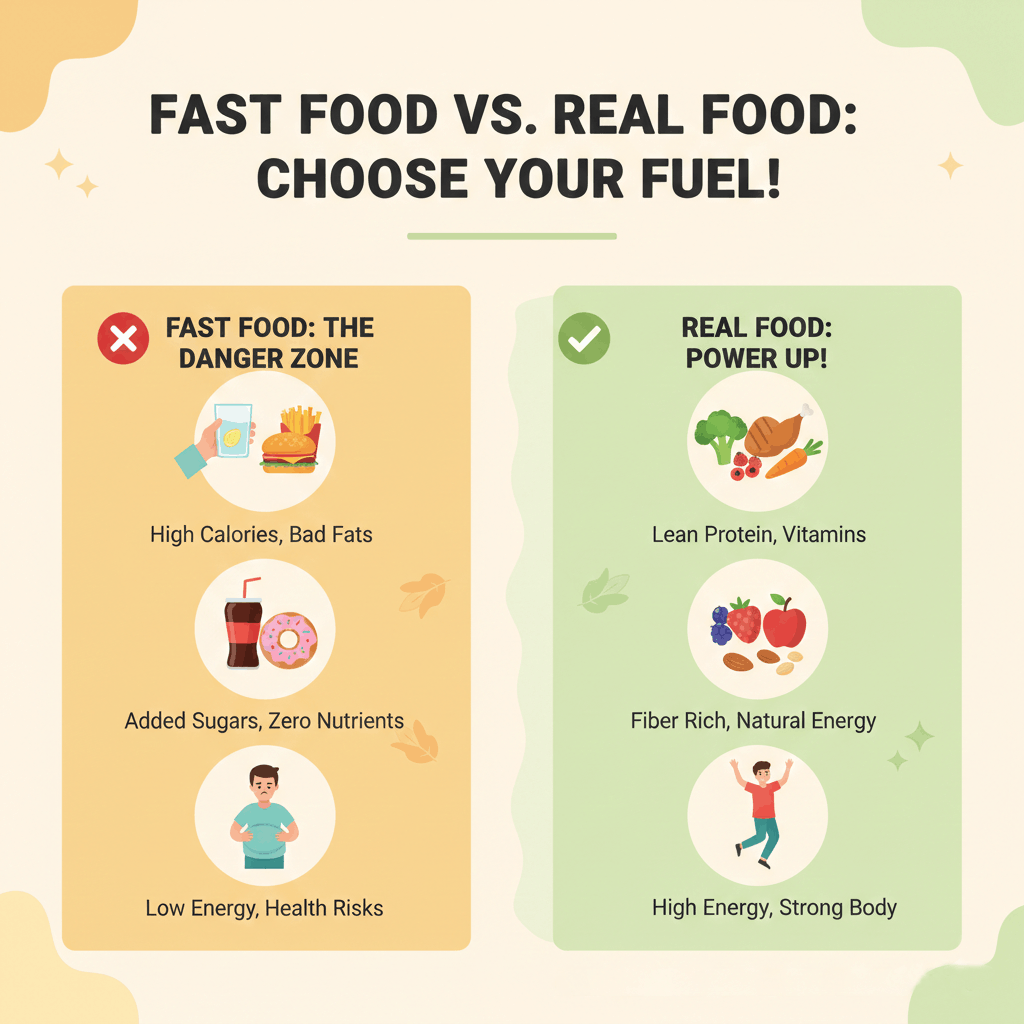
The biggest issue with fast food is that it’s “calorie-dense” but “nutrient-poor.” This means you’re getting a massive amount of energy (calories) in just a few bites, but almost zero vitamins, minerals, or fiber.
Because these calories hit your system all at once, your body doesn’t really know what to do with them. Instead of using them for steady energy, it often stores them as fat. Over time, this leads to weight gain that is very hard to lose.
2. The Obesity Cycle
We’ve all seen the headlines about rising obesity rates. Regular fast food consumption is a leading cause. When you eat high-fat, high-sugar foods constantly, your body starts storing extra fat around your organs.
Obesity isn’t just about how you look; it’s about how your body functions. It increases the risk of:
- Heart Disease: Your heart has to work much harder.
- Type 2 Diabetes: Your blood sugar levels go haywire.
- Joint Pain: Extra weight puts a lot of stress on your knees and back.
3. It’s Tough on Your Heart
Fast food is usually a “salt and fat” bomb. Most of it is cooked in cheap oils that contain Trans Fats and Saturated Fats. These are the “bad” fats that clog your arteries and raise your bad cholesterol (LDL).
Combine that with the massive amounts of sodium (salt) used to make the food taste better, and you’ve got a recipe for high blood pressure. Your heart is a muscle that needs clean fuel to keep pumping—grease and salt are not it.
4. The Silent Threat: Diabetes
Have you ever felt a “sugar crash” after a big meal? Fast food is often full of refined carbs and hidden sugars (even in the burger buns and sauces!). These cause your blood sugar to spike.
When this happens every day, your body starts becoming “insulin resistant.” This is the primary stepping stone to Type 2 Diabetes. The scary part? You might not feel the damage happening until it’s already a serious medical issue.
5. Digestion Problems
Fast food is notoriously low in fiber. Fiber is what keeps your digestive system moving smoothly. Without it, you’re looking at:
- Constipation: Things just get “stuck.”
- Bloating: That heavy, uncomfortable feeling after a meal.
- Gut Health Issues: Your “good” gut bacteria hate processed sugar and grease.
If you find yourself reaching for antacids after every meal, your diet might be trying to tell you something!
6. The “Brain Fog” and Mental Health Connection
This is something people don’t talk about enough. What you eat affects your brain. Research shows that people who eat a lot of processed fast food are more likely to experience:
- Fatigue: You feel tired even if you’ve slept.
- Mood Swings: The sugar highs and lows mess with your emotions.
- Lower Motivation: It’s hard to be productive when your body is struggling to process junk.
Eating fresh, whole foods actually helps you think clearer and feel happier.
7. It’s Especially Bad for the Kids
If you’re a parent, this is the big one. Kids are still growing. Their brains and bodies need building blocks like protein, calcium, and vitamins.
When children get hooked on fast food early:
- They lose interest in healthy vegetables.
- They develop bad eating habits that stay with them for life.
- They are at a higher risk of “early-onset” health problems that used to only happen to adults.
Why Is It So Hard to Stop?
Don’t feel bad if you find fast food hard to resist. It’s actually designed that way!
- The “Bliss Point”: Companies spend millions to find the perfect balance of salt, sugar, and fat that makes your brain release dopamine.
- Convenience: It’s everywhere.
- Marketing: Those colorful ads are designed to make you hungry the moment you see them.
Can You Ever Eat Fast Food Again?
Of course you can! I’m not saying you have to ban piza forever. The goal is to move away from regular consumption.
Here are a few “human-friendly” tips:
- The 80/20 Rule: Try to eat healthy, home-cooked meals 80% of the time. Save the fast food for that 20% (special occasions or once-a-week treats).
- Drink Water: Swap the soda for water. That alone removes a massive amount of sugar.
- Check the Menu: Many places now offer grilled chicken instead of fried, or salads instead of fries.
- Cook at Home: Even a simple home-made sandwich is usually 10x healthier than a fast-food burger.
Final Thoughts
At the end of the day, your health is your greatest wealth. Fast food might save you 20 minutes today, but it could cost you years of health later on. You don’t have to change your whole life overnight—just start by choosing one “real” meal over a “fast” one today. Your body will thank you for it!
⚠️ Disclaimer: This article is for general health awareness and educational purposes only. It is not a substitute for professional medical advice or treatment. Always consult with a doctor or a certified nutritionist before making major changes to your diet, especially if you have existing health conditions.