Polycystic Ovary Syndrome, commonly known as PCOS, is one of the most widespread hormonal disorders affecting women of reproductive age.
Despite how common it is, many women hear the term “PCOS” and feel immediately confused or scared. What does it actually mean? Does it mean you have dangerous cysts? Will you be able to have children?
In this guide, we will break down exactly what PCOS is, why it happens, the symptoms to look out for, and how you can take control of your health.

What Exactly is PCOS?
PCOS is primarily a hormonal and metabolic disorder.
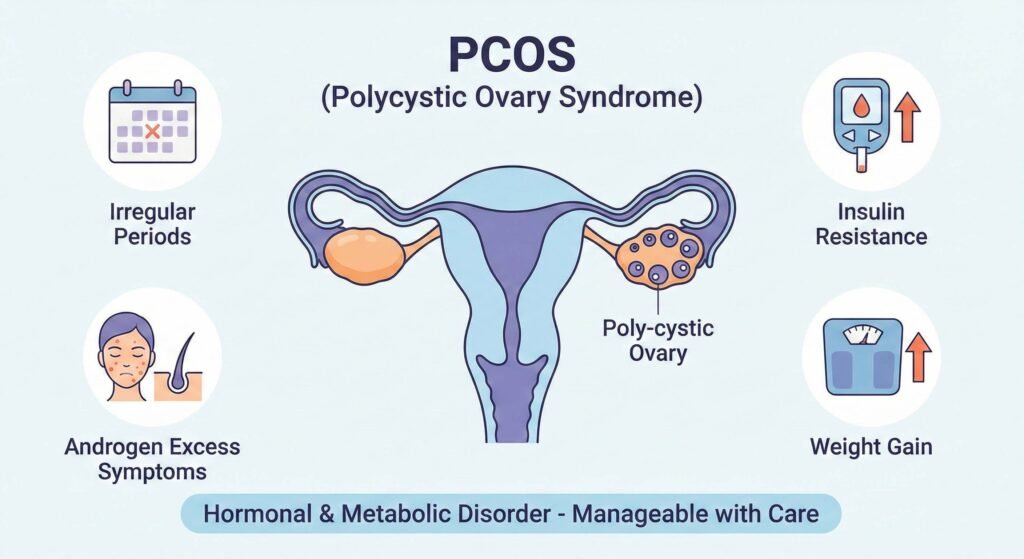
The name “Polycystic Ovary Syndrome” can actually be a bit misleading. While many women with PCOS do develop small fluid-filled sacs (follicles) on their ovaries, these are not actually typical “cysts.” Furthermore, you can be diagnosed with PCOS without having these cysts on your ovaries at all!
At its core, PCOS means your reproductive hormones are out of balance, which interferes with the growth and regular release of eggs from the ovaries (ovulation).
Why Does PCOS Happen? (The Root Causes)
The exact, singular cause of PCOS is still unknown to doctors, but research shows it is usually tied to a combination of the following factors:
1. Excess Androgens (Male Hormones)
All women naturally produce small amounts of androgens (often called “male hormones,” like testosterone). However, women with PCOS produce higher-than-normal levels of these hormones. This excess prevents the ovaries from releasing an egg every month and causes physical symptoms like acne and extra hair growth.
2. Insulin Resistance
This is a massive factor for about 70% of women with PCOS. Insulin is a hormone that helps your body turn the sugar from food into energy. If you are “insulin resistant,” your body’s cells don’t respond well to insulin. To compensate, your pancreas pumps out more insulin. High insulin levels trigger your ovaries to produce more androgens, creating a vicious cycle.
3. Genetics
PCOS tends to run in families. If your mother, sister, or aunt has PCOS or Type 2 Diabetes, you have a higher risk of developing the syndrome yourself.
Common Symptoms of PCOS
PCOS looks different in every woman. Some may have mild symptoms, while others struggle with severe ones. The most common signs include:
- Irregular Periods: Missing periods, having them very rarely, or having prolonged menstrual cycles.
- Unwanted Hair Growth (Hirsutism): Excess dark, coarse hair on the face, chin, chest, stomach, or back.
- Severe Acne: Stubborn breakouts on the face, chest, or upper back that don’t respond to usual treatments.
- Weight Gain: Especially difficulty losing weight or carrying extra weight around the abdomen.
- Hair Thinning: Hair loss on the scalp that mimics male-pattern baldness.
- Fertility Issues: Difficulty getting pregnant due to a lack of regular ovulation.
Is PCOS Dangerous?
PCOS itself is not life-threatening, but if left unmanaged for years, the underlying hormonal and metabolic imbalances can lead to serious long-term health complications:
- Type 2 Diabetes: Due to chronic insulin resistance.
- Heart Disease: Higher risk of high blood pressure and unhealthy cholesterol levels.
- Sleep Apnea: Momentary pauses in breathing during sleep (highly associated with weight gain).
- Endometrial Cancer: Without regular periods, the uterine lining can build up, increasing cancer risk later in life.
- Mental Health Struggles: High rates of anxiety, depression, and poor body image.
How Can You Manage PCOS?
1. Consult a Specialist
Your first step should be seeing a gynecologist or endocrinologist. They will run blood tests (to check hormone and blood sugar levels) and perhaps do an ultrasound to confirm the diagnosis and tailor a medical plan for you.
2. Manage Your Weight
If you are overweight, losing just 5% to 10% of your body weight can significantly improve your symptoms, regulate your menstrual cycle, and lower insulin and androgen levels.
3. Change Your Diet
Diet is medicine for PCOS.
- Cut back on refined carbohydrates and sugary snacks.
- Focus on whole foods: plenty of vegetables, lean proteins, and healthy fats.
- Eat foods with a low Glycemic Index (GI) to keep blood sugar stable.
4. Move Your Body
Regular exercise improves how your body uses insulin. A mix of moderate cardio (like brisk walking or swimming) and strength training (lifting weights) is highly effective for PCOS management.
5. Protect Your Mental Health
Living with a chronic condition is stressful. Don’t hesitate to seek therapy, join a PCOS support group, or practice daily stress-relief techniques like meditation.
Can PCOS Be Completely Cured?
The short answer is: No, there is no permanent cure for PCOS.
However, the encouraging news is that it is highly manageable. With the right lifestyle changes, dietary adjustments, and sometimes medication (like birth control pills or insulin-sensitizing drugs), you can push your PCOS into “remission.” Many women with PCOS go on to live completely healthy, symptom-free lives and have healthy pregnancies.
Conclusion
PCOS can feel overwhelming when you are first diagnosed, but it does not define you. By understanding how your hormones work and making targeted lifestyle changes, you can take your power back. Pay attention to what your body is telling you, and never hesitate to advocate for yourself at the doctor’s office.
⚠️ Disclaimer:
This article is for general health and educational awareness only. It is not a substitute for professional medical diagnosis or treatment. Always consult with a qualified healthcare provider regarding your specific symptoms and health conditions.