Let’s be real. If you are reading this, you probably found it through Facebook, LinkedIn, or maybe a link sent via WhatsApp.
Social media has done amazing things. It connects us with long-lost friends, gives us a voice, and keeps us entertained. But as a doctor, I am seeing a worrying trend. More and more patients—especially young adults—are coming in with symptoms of anxiety, depression, and severe sleep issues. And very often, the root cause lies in the palm of their hands.
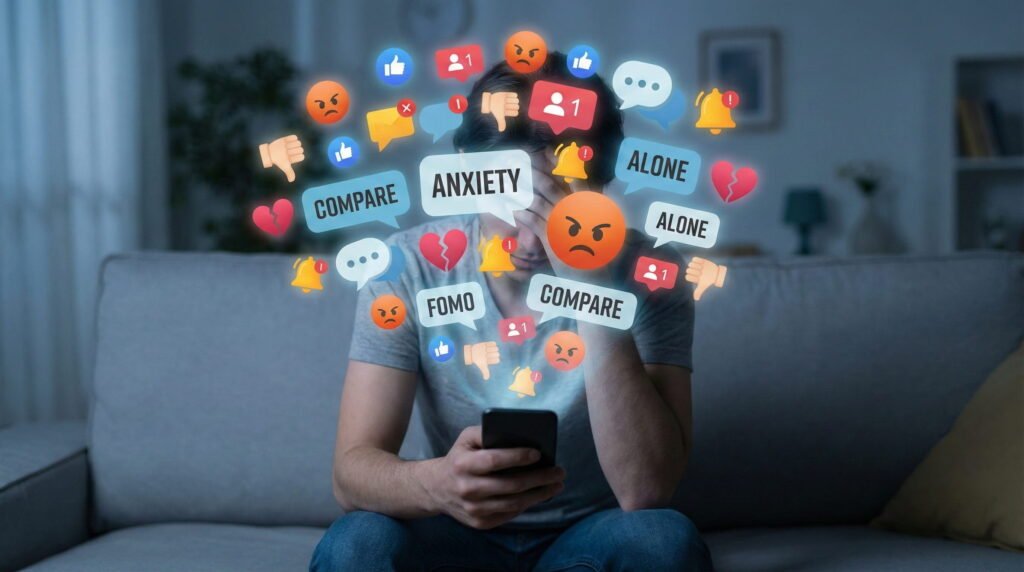
We often don’t realize it, but that endless scroll is doing more than just passing time. It is reshaping how our brains handle stress and emotion.
In this article, let’s explore how social media might be affecting your mental peace and what you can do about it.

1. The Trap of “Compare and Despair”
This is the biggest issue I see. On social media, everyone posts their “highlight reel.” You see their promotions, their perfect vacations, and their happy relationships.
What you don’t see are their struggles, their bad days, or their insecurities. When you constantly compare your “behind-the-scenes” with someone else’s “highlight reel,” it’s natural to feel inadequate. You might start thinking, “Why isn’t my life that good?” This lowers self-esteem and creates a false sense of failure.
Doctor’s Reality Check: Remember, social media is a curated gallery, not a documentary of real life.
2. Anxiety and FOMO (Fear Of Missing Out)
Do you feel the urge to check your phone every time it buzzes? That is your brain reacting to a “micro-dose” of stress.
Constant notifications keep your brain on high alert. You become afraid of missing out on the latest news, a friend’s post, or a viral trend. This state of constant alertness (hyper-vigilance) prevents your mind from ever truly relaxing, leading to chronic anxiety and restlessness.
3. The “Goldfish” Attention Span
Have you noticed it’s getting harder to read a book or watch a long movie without checking your phone?
Short-form content like Reels, TikToks, and Shorts provides instant dopamine hits. This trains your brain to crave quick excitement. As a result, your patience decreases, and your ability to focus on deep, meaningful work or study suffers.
4. It Is Stealing Your Sleep
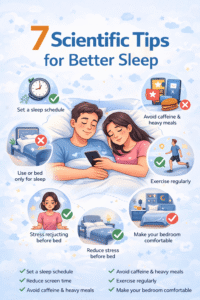
I cannot stress this enough: Screens and Sleep are enemies.
Many of us scroll through our feeds right before bed. The blue light from the screen suppresses melatonin (the sleep hormone), making it harder to fall asleep. Moreover, seeing something upsetting or exciting keeps your brain active when it should be winding down. Poor sleep is a direct highway to poor mental health.
5. Loneliness in a Connected World
It sounds ironic, right? We are more connected than ever, yet we are lonelier than ever.
Social media gives us the illusion of connection. You might have 1,000 “friends” online, but how many can you call in an emergency? Replacing real-life face-to-face interactions with likes and comments can leave a void in your emotional life, leading to feelings of isolation and depression.
6. Cyberbullying and Negativity
The internet can be a harsh place. Trolls, negative comments, and cyberbullying are real dangers, especially for teenagers. Getting negative feedback online can feel devastating and can trigger severe self-doubt. It’s important to remember that people often say things behind a screen that they would never say to your face.
So, Should You Delete All Your Accounts?
Absolutely not. Social media isn’t evil; it’s a tool. A hammer can build a house or break a window—it depends on how you use it.
Doctor’s Prescription for Healthy Usage:
Here are a few simple changes that can make a huge difference:
- Set a Time Limit: Use digital wellbeing apps to limit your daily usage (e.g., 30 minutes a day).
- The “No-Phone Zone”: Keep your bedroom phone-free. Buy a traditional alarm clock.
- Unfollow triggers: If a certain account makes you feel bad about yourself, unfollow or mute them. Protect your peace.
- Connect Offline: Make it a rule to put phones away when having dinner with family or coffee with friends.
Final Thoughts
Your mental health is your most valuable asset. Don’t let an algorithm control how you feel. Use social media to be inspired, informed, and connected—but never let it define your worth.
You use the phone; don’t let the phone use you.
⚠️ Medical Disclaimer: This article is for general awareness only. If you are feeling overwhelmingly anxious, depressed, or having negative thoughts, please seek professional help from a psychologist or psychiatrist immediately.