We all experience sadness at some point in our lives. It is a completely natural human response to pain, loss, or disappointment. Losing a loved one, going through a breakup, or facing a major failure are all events that can understandably make us feel down.
However, many people mistakenly believe that sadness and depression are the same thing. While they share some similar feelings, they are fundamentally different. Understanding this distinction is crucial for recognizing when you or someone you love might need professional help.
In this guide, we will explore the key differences between temporary sadness and clinical depression.

What Is Sadness?
Sadness is a normal, healthy human emotion. It is usually a reaction to a specific, identifiable event or situation.
Common triggers for sadness include:
- The death of a family member or friend.
- Losing a job or financial stability.
- Ending a significant relationship.
- Receiving bad news or experiencing a setback.
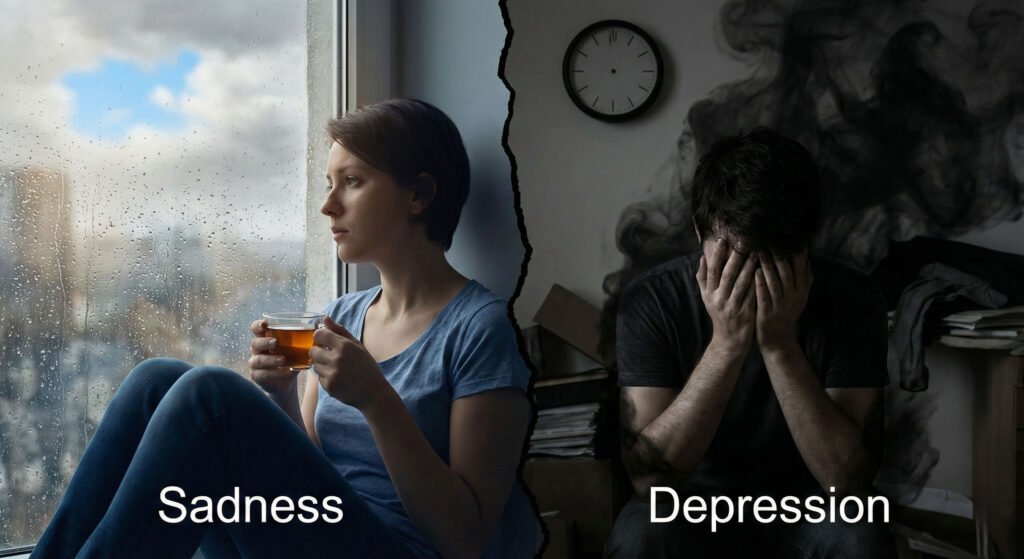
Key Characteristic: Sadness is typically temporary. Like a storm, it passes. While you feel down, you can still experience moments of joy or laughter, and talking to friends or family often helps lighten the burden. Over time, the intensity of the sadness fades as you process the event.
What Is Depression?
Depression (Major Depressive Disorder) is different. It is not just “feeling sad.” It is a serious but treatable mental health condition that affects how you feel, think, and handle daily activities.
Unlike sadness, depression doesn’t always require a specific trigger, and it casts a long shadow over every aspect of a person’s life.
People with depression often experience:
- A persistent feeling of emptiness or numbness.
- A loss of interest or pleasure in activities they used to enjoy (hobbies, socializing, sex).
- Overwhelming feelings of worthlessness, guilt, or self-hatred.
Key Characteristic: Depression is persistent and pervasive. It hangs on for weeks, months, or even years if left untreated, significantly interfering with a person’s ability to function.
The Core Differences at a Glance
Here is a breakdown of how to distinguish between the two:
1. Duration and Consistency
- Sadness: Usually lasts for a few days to a week or two. The feelings come in waves, intermixed with periods of feeling okay.
- Depression: Persistent feelings of sadness, emptiness, or hopelessness that last for at least two weeks or longer, present almost every day, for most of the day.
2. The Role of a Trigger
- Sadness: Almost always has a clear cause—something specific happened that made you sad.
- Depression: Can be triggered by a life event, but it can also surface without any obvious reason. Sometimes, a seemingly small event can trigger a deep, prolonged depressive episode due to underlying biological or psychological factors.
3. Symptoms and Severity
| Feature | Sadness | Depression |
| Mood | Feeling down or unhappy. | Persistent sadness, anxiety, or an “empty” mood. |
| Enjoyment | You can still laugh or enjoy things occasionally. | Inability to feel pleasure in activities once enjoyed (anhedonia). |
| Physical Health | Sleep and appetite may be slightly affected but return to normal quickly. | Significant changes in sleep (insomnia or oversleeping) and appetite (weight loss or gain). Chronic fatigue. |
| Self-View | Self-esteem is usually intact. | Feelings of worthlessness, excessive guilt, and self-criticism. |
| Outlook | You have hope that things will get better. | Persistent feelings of hopelessness and pessimism about the future. |
4. Impact on Daily Life
- Sadness: While you may feel unmotivated, you are generally still able to perform your daily responsibilities like going to work, attending school, and taking care of yourself.
- Depression: Daily functioning becomes incredibly difficult. Simple tasks like getting out of bed, showering, or going to work can feel like climbing a mountain. Social withdrawal is very common.
When Is It Time to Seek Professional Help?
Sadness is a part of life, but depression requires attention. You should reach out to a mental health professional (a therapist, psychologist, or psychiatrist) if:
- Your feelings of sadness persist for more than two weeks and are not getting better.
- Your mood is negatively affecting your work, school, relationships, or physical health.
- You are using alcohol or drugs to cope with your feelings.
- Most Importantly: You have thoughts of death, suicide, or harming yourself.
Remember: Seeking help is not a sign of weakness. It is an act of strength and self-care. Depression is a medical condition, just like diabetes or heart disease, and it responds well to treatment, including therapy, medication, or a combination of both.
Conclusion
It is vital to recognize that sadness is a universal human emotion, while depression is a treatable mental health condition.
Sadness is a temporary reaction to life’s challenges. Depression is a heavy, persistent fog that dims your world.
By understanding the difference, you can be more compassionate toward yourself and others. If you suspect you or someone you care about is struggling with depression, don’t wait. Reach out for the support that can lead to a healthier, more fulfilling life.
⚠️ Disclaimer:
This article is for general informational and educational purposes only. It is not intended to be a substitute for professional medical advice, diagnosis, or treatment. If you are struggling with your mental health, please consult a qualified healthcare provider.