Radiotherapy Decoded: A Simple Guide to How It Works
Let’s be honest for a moment. When you or a loved one is navigating a cancer diagnosis, the medical terms can feel like a foreign language. And one of the words that often sounds the scariest is “Radiotherapy.”
It sounds intense, doesn’t it? For many, the word brings up images of sci-fi movies or scary warning signs. But in the world of modern medicine, radiotherapy is actually one of the most trusted and effective tools we have to fight cancer. It’s not a villain; it’s a superhero in a lab coat.
If your doctor has suggested radiotherapy, or if you are just trying to understand what it means, you have come to the right place. Let’s break this down simply—no complicated medical textbooks required. Just real talk.
What Exactly is Radiotherapy?
Think of radiotherapy (often just called “radiation”) as a highly targeted energy beam.
You know how an X-ray takes a picture of your bones? Radiotherapy uses similar waves—usually high-energy X-rays—but they are much more powerful. The goal isn’t to take a picture; the goal is to target specific cells.
Unlike chemotherapy, which usually travels through your whole body via the bloodstream, radiotherapy is a local treatment. It only affects the specific part of the body where the beam is aimed. Think of it like a sniper, not a shotgun. It’s precise.

How Does It Actually Kill Cancer?
Okay, let’s get a little scientific, but keep it simple.
Our bodies are made of cells. These cells grow and divide to keep us healthy. Cancer cells are essentially “bullies”—they grow way too fast and refuse to stop.
Radiotherapy works by damaging the DNA inside these cells. When the DNA is broken:
- The cancer cells lose the ability to divide and multiply.
- Eventually, these cells die off.
- The body then naturally cleans up and removes these dead cells.
“But what about my healthy cells?” This is a common question. Yes, nearby healthy cells can get a little bit of radiation too. However, normal, healthy cells are much smarter and stronger than cancer cells. They have the ability to repair themselves after the treatment is over. Cancer cells? They aren’t so lucky—they stay broken and die.
Why Do Doctors Prescribe It?
Radiotherapy isn’t a “one size fits all” treatment. Doctors use it for different reasons depending on the patient’s specific situation. Here is why it might be part of the plan:
1. The Knockout Punch (Cure)
For some cancers, radiation alone is enough to destroy the tumor and cure the disease.
2. The Shrink Ray (Before Surgery)
sometimes a tumor is too big to remove safely. Doctors use radiation to shrink it down, making the operation easier and safer.
3. The Cleanup Crew (After Surgery)
Even after a surgeon removes a tumor, microscopic cancer cells might be hiding behind. Radiation is used to “mop up” these leftovers to make sure the cancer doesn’t come back.
4. Symptom Relief (Palliative Care)
If a cancer is advanced and cannot be cured, radiation can still help. It can shrink tumors that are pressing on nerves or bones, relieving pain and improving quality of life.
The Two Main Types of Radiotherapy
There are two ways doctors deliver this treatment:
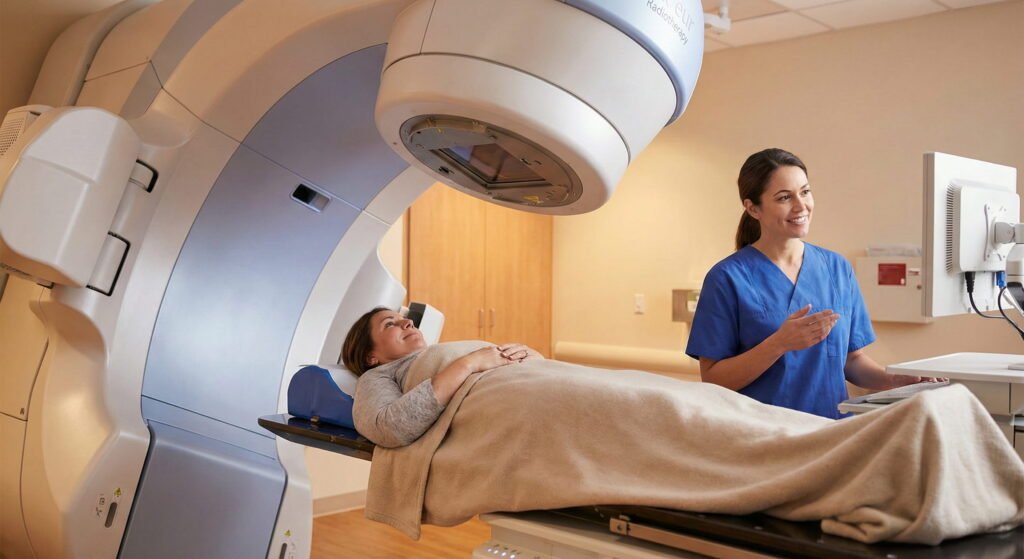
- External Beam Radiotherapy: This is the most common type. You lie on a table, and a large machine (that looks a bit like a giant scanner) moves around you, directing beams at the cancer from outside your body. It never touches you.
- Internal Radiotherapy (Brachytherapy): This is less common. It involves placing a small radioactive source (like a seed or wire) inside your body, right next to the tumor.
What Does a Session Feel Like? (The Experience)
This is the part that surprises most people: Radiotherapy itself is painless.
When the machine is on and the beams are working, you won’t feel heat, you won’t feel a burn, and you won’t feel pain. It is exactly like getting an X-ray or a CT scan. You just lie still, the machine makes some buzzing or clicking noises, and then it’s over.
A session usually lasts only 15 to 30 minutes, and most of that time is just getting you into the right position. The actual “zapping” only takes a few minutes.
How Long Does Treatment Last?
This isn’t an overnight fix. Radiotherapy usually requires patience.
- It is typically given five days a week (Monday to Friday).
- Treatment can last anywhere from 2 to 7 weeks.
- The weekends are usually rest days to let your healthy cells recover.
Let’s Talk About Side Effects
I won’t lie to you—there can be side effects. But they aren’t the same for everyone. It depends heavily on where in the body you are getting radiation.
Here are the most common ones:
- Fatigue: This is the big one. As your body works hard to repair the damage and clean up dead cancer cells, you might feel very tired. This tiredness can build up over the weeks.
- Skin Changes: The skin in the treated area might turn red, dry, or itchy—kind of like a mild sunburn.
- Site-Specific Issues:
- Radiation to the head might cause hair loss (but only in that specific spot).
- Radiation to the stomach might cause some nausea.
The good news? Most of these side effects are temporary. They usually start to fade a few weeks after treatment ends.
Is It Safe?
Yes. Radiotherapy has been used for over 100 years, and technology has improved massively. Modern machines are incredibly precise. Doctors plan the treatment using 3D scans to make sure the radiation hits the tumor while missing as much healthy tissue as possible. It’s highly controlled and carefully monitored.
How to Take Care of Yourself During Treatment
You are a partner in your own healing. Here are a few friendly tips to help you get through it:
- Listen to Your Body: If you are tired, sleep. Don’t try to be a hero and do everything you used to do. Your body is running a marathon on the inside; give it rest.
- Be Gentle with Your Skin: In the area being treated, wear loose, soft cotton clothes. Avoid harsh soaps, perfumes, or scrubbing. Treat that skin like baby skin.
- Eat Well: Your body needs fuel to repair itself. Try to eat a balanced diet. If you lose your appetite, try eating small snacks throughout the day instead of big meals.
- Talk to Your Team: If your skin burns, tell the nurse. If you feel sick, tell the doctor. They have creams and medicines that can help, but only if they know how you feel.
- Protect Your Mental Health: It’s okay to feel anxious. Join a support group, talk to a friend, or just take time to do things that make you smile.
Conclusion
Radiotherapy is a powerful ally in the fight against cancer. It works by stopping bad cells in their tracks and giving your body a chance to heal.
If you are facing this treatment, remember: knowledge is the best way to beat fear. You aren’t just lying on a table; you are actively fighting the disease. Thousands of people go through this every day and come out the other side to live full, happy lives.
Trust your medical team, be kind to yourself, and take it one day at a time. You’ve got this.
⚠️ Disclaimer:
This article is for general informational and educational purposes only. It is not intended to be a substitute for professional medical advice, diagnosis, or treatment. Always seek the advice of your physician or oncologist regarding your specific medical condition and treatment plan.