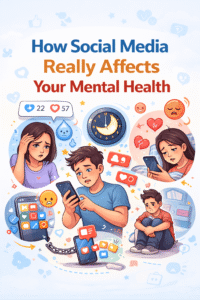
Social media has become the backdrop of our lives. From the moment we wake up to the moment we fall asleep, we are scrolling through Instagram, checking Facebook, or watching TikToks.
We use it to stay informed, laugh at memes, and keep up with friends. But there is a burning question that researchers and users alike are asking: What is this doing to our minds?
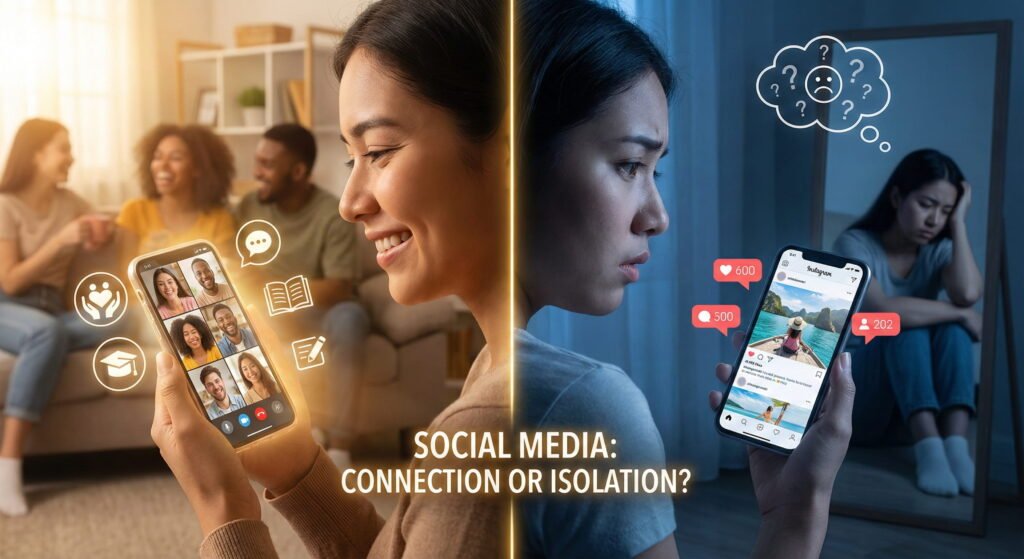
The answer isn’t black and white. Social media is a tool—it has the power to lift us up, but it also has the power to bring us down.
In this guide, we will break down the psychological impact of social media and how to use it without losing your peace of mind.

The Good Side: Connection and Support
Let’s start with the positives. Social media isn’t all bad; in fact, it can be a lifeline.
1. Bridging the Distance
It allows us to stay connected with family and friends who live thousands of miles away. During times of isolation (like the pandemic), these platforms were the only way many people felt less alone.
2. Access to Information
From health tips to educational content and job opportunities, social media democratizes information. It raises awareness about important social issues and helps us learn new skills.
3. Finding Your Tribe
If you are struggling with a specific problem—be it a rare illness, mental health struggles, or a niche hobby—you can find a community online. These groups provide emotional support and make you feel seen and understood.
The Dark Side: When Scrolling Becomes Harmful
While connection is great, there are significant risks when usage becomes excessive or mindless.
1. The Comparison Trap
This is the biggest enemy of mental health. People tend to post their “highlight reels”—their best angles, expensive vacations, and happy moments. When you compare your behind-the-scenes reality with someone else’s curated perfection, your self-esteem takes a hit. You might feel like you aren’t achieving enough or living well enough.
2. FOMO and Anxiety
FOMO (Fear Of Missing Out) is real. Seeing friends hang out without you or seeing everyone talking about a trend can trigger anxiety. The constant need to check for notifications creates a state of “hyper-alertness,” keeping your stress levels high.
3. The Sleep Thief
Using your phone before bed is a recipe for disaster.
- Blue Light: The light from screens tricks your brain into thinking it’s daytime, stopping the production of melatonin (the sleep hormone).
- Mental Stimulation: Engaging content keeps your brain active when it should be winding down. Poor sleep directly leads to depression, irritability, and lack of focus.
4. The Paradox of Loneliness
Ironically, the more time we spend “connecting” online, the lonelier we often feel. Digital interactions cannot replace the warmth of face-to-face conversation, a hug, or shared laughter in the real world. Prioritizing virtual friends over real ones can lead to isolation.
How Much is Too Much?
There is no magic number, but quality matters more than quantity. If you spend 2 hours learning and chatting with friends, that might be fine. But if you spend 2 hours doom-scrolling and feeling jealous of others, that is harmful.
Warning Signs You Need a Break:
- You feel anxious or restless when you can’t check your phone.
- Social media is interfering with your work or studies.
- You constantly feel jealous or inadequate after using it.
- You are neglecting real-life relationships.
How to Find Balance (Digital Detox Tips)
You don’t need to delete your accounts to be healthy. You just need boundaries.
- Set Time Limits: Use the “Digital Wellbeing” or “Screen Time” features on your phone to limit app usage.
- Curate Your Feed: Unfollow accounts that make you feel bad about yourself. Follow accounts that inspire, educate, or make you laugh.
- No-Phone Zones: Keep your bedroom a phone-free zone. Buy a traditional alarm clock and charge your phone in another room.
- Focus on Real Life: Make an effort to meet friends in person. Look people in the eye when talking, instead of looking at your screen.
Conclusion
Social media is a double-edged sword. It is a wonderful servant but a terrible master.
The key is Intentionality. Ask yourself: “Am I using this app to connect and learn, or am I using it to escape and compare?”
By being mindful of how you scroll, you can protect your mental health and enjoy the digital world safely.
⚠️ Disclaimer:
This article is for general informational and educational purposes only. It is not intended to be a substitute for professional medical advice or psychological counseling. If you are struggling with severe anxiety or depression, please consult a mental health professional.