Is Intermittent Fasting Safe? A Honest Guide for Beginners
Let’s be honest for a second. Everywhere you look on social media or in health magazines these days, someone is talking about Intermittent Fasting (IF).
Your coworker is doing it. Your gym buddy swears by it. Even celebrities are posting about their “eating windows.” It sounds great—weight loss, better focus, and supposedly living longer. But when you strip away the hype, a very real question remains:

Is Intermittent Fasting actually safe?
Or is it just another crash diet wrapped in a fancy name?
If you are curious about trying it but worried about starving yourself or hurting your body, you are in the right place. In this guide, we are going to break down exactly what IF is, why people love it, and most importantly—who should absolutely avoid it.
Let’s dive in.
What Exactly Is Intermittent Fasting?
First things first: Intermittent Fasting isn’t a “diet” in the traditional sense. It doesn’t tell you what to eat (no banning carbs or counting cabbage leaves). Instead, it tells you when to eat.
Think of it as a schedule for your meals.
For most of human history, we didn’t have refrigerators or 24/7 food delivery apps. Our ancestors naturally fasted when food was scarce. Our bodies are actually designed to go without food for short periods.
IF simply mimics that natural cycle. You cycle between periods of eating and periods of fasting.
The Most Popular Ways to Do It
There isn’t just one way to fast. Here are the methods you’ll hear about most often:
1. The 16/8 Method (The Beginner’s Favorite)
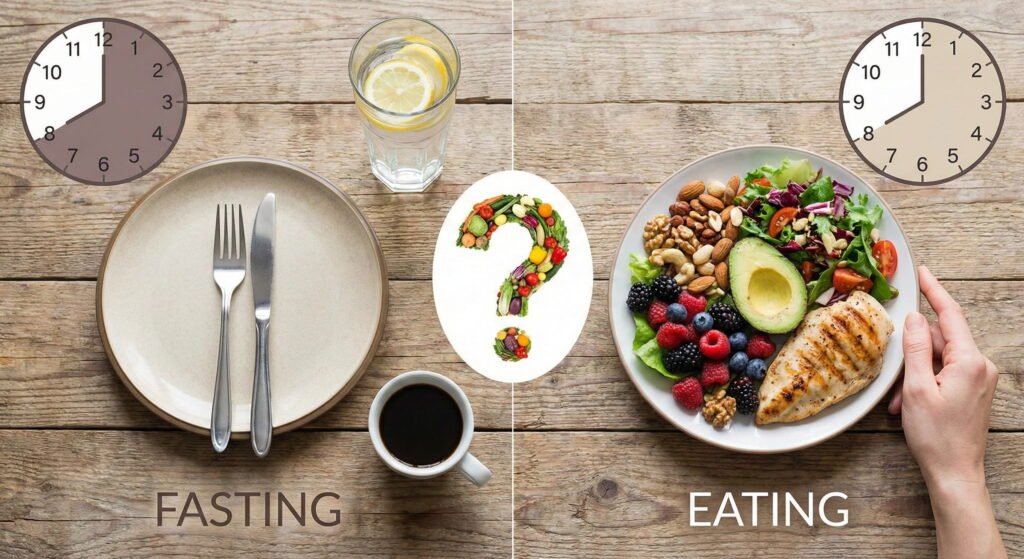
This is the most popular because it’s the easiest. You fast for 16 hours and eat all your meals within an 8-hour window.
- Example: You stop eating at 8:00 PM, sleep, skip breakfast, and eat your first meal at 12:00 PM the next day. Basically, you just skip breakfast.
2. The 5:2 Method
For five days of the week, you eat normally. For the other two days (non-consecutive), you restrict your calories significantly (usually around 500–600 calories).
3. Eat-Stop-Eat
This involves a full 24-hour fast once or twice a week. (e.g., Dinner on Monday to Dinner on Tuesday). This is a bit more advanced and harder for beginners.
The Potential Benefits: Why Do People Do It?
Research suggests that giving your digestive system a break can do some pretty cool things for your body.
1. Weight Loss Without the Math
When you restrict your eating window, you naturally tend to eat fewer meals. Unless you stuff yourself with pizza during your 8-hour window, you will likely consume fewer calories without having to count them. Plus, fasting changes your hormone levels to facilitate weight loss.
2. Insulin Sensitivity (Blood Sugar Control)
When you eat, your insulin spikes. When you fast, insulin drops. Lower insulin levels make stored body fat more accessible to be burned for energy. This can be a game-changer for people at risk of Type 2 Diabetes.
3. Cellular Repair (Autophagy)
This is the scientific part. When you fast, your cells initiate a cellular “waste removal” process called autophagy. Think of it as your body taking out the trash—cleaning out old, dysfunctional proteins that build up inside cells.
4. Simplicity
Let’s be real—planning three meals and two snacks a day is exhausting. IF simplifies your life. Fewer meals mean less cooking, less cleaning, and less meal prepping.
But… Is It Safe for Everyone?
Here is the section you need to pay attention to. The short answer is: No, Intermittent Fasting is not for everyone.
While it is safe for most healthy, well-nourished adults, it can be dangerous for certain groups.
Who Should Be Careful (or Avoid It Entirely)?
- Pregnant or Breastfeeding Women: You are growing a human or feeding one! Your body needs a steady stream of nutrients. Fasting can disrupt this.
- People with Diabetes: If you are on insulin or medication, fasting can cause your blood sugar to drop to dangerous levels (hypoglycemia). Always talk to your doctor first.
- History of Eating Disorders: If you have ever struggled with anorexia, bulimia, or binge eating, IF can be a trigger. It puts too much focus on restriction.
- Underweight Individuals: If your BMI is already low, you don’t need to restrict calories.
- Children and Teenagers: Growing bodies need constant fuel. Fasting is generally not recommended for anyone under 18.
The “Ugly” Side Effects (What to Expect)
If you decide to try it, be prepared. The first week can be rough. Your body is addicted to its regular eating schedule, and it will protest.
Common side effects include:
- The “Hangry” Phase: You might feel irritable and extremely hungry.
- Headaches: Often caused by dehydration or withdrawal from sugar/caffeine.
- Dizziness or Weakness: Feeling a bit lightheaded as your blood sugar stabilizes.
- Brain Fog: Some people feel sharper, but others feel fuzzy at first.
Note: These usually go away after a week or two as your body adapts.
How to Start Safely (Don’t Go Crazy)
If you want to give IF a shot, don’t jump into a 24-hour fast immediately. That’s a recipe for disaster.
Here is a safer roadmap:
1. Start Slow
Don’t do 16 hours right away. Start with 12 hours (e.g., stop eating at 8 PM, eat breakfast at 8 AM). Once that feels easy, push breakfast to 9 AM, then 10 AM.
2. Hydrate, Hydrate, Hydrate
This is the biggest mistake beginners make. You get a lot of water from food. When you aren’t eating, you need to drink more water, herbal tea, or black coffee to stay hydrated.
3. Eat Real Food
The fasting window isn’t a magic eraser for a bad diet. If you break your fast with donuts and soda, you won’t see results. During your eating window, focus on:
- Protein: Chicken, eggs, fish, lentils.
- Healthy Fats: Avocado, nuts, olive oil.
- Fiber: Veggies and fruits.
4. Listen to Your Body
If you feel faint, shaking, or truly unwell—EAT. There is no prize for suffering. Intermittent fasting should feel challenging but manageable, not like torture.
The Bottom Line
Intermittent Fasting is a tool, not a religion.
For many people, it is a safe, effective lifestyle change that helps manage weight and improve metabolic health. For others, it’s just a headache waiting to happen.
The “safest” diet is the one you can stick to and the one that makes you feel good. If fasting stresses you out or makes you feel weak, it’s okay to skip it and just eat a healthy breakfast.
Your health is about the long game, not just skipping a meal.
⚠️ Disclaimer:
This article is for general informational and educational purposes only. It is not intended to be a substitute for professional medical advice, diagnosis, or treatment. Always seek the advice of your physician or other qualified health provider with any questions you may have regarding a medical condition or before starting a new diet.