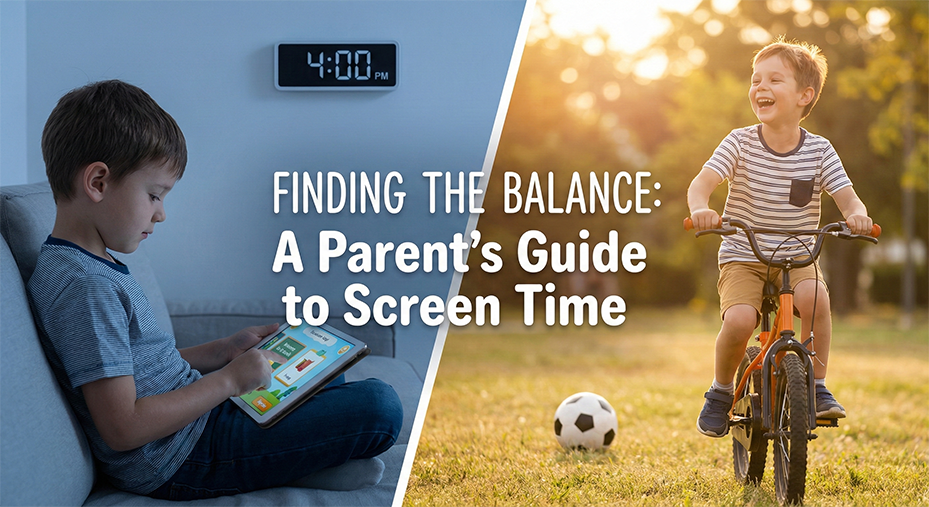
In today’s digital age, screens are everywhere. From online classes to video games and social media, smartphones, tablets, TVs, and computers have become deeply integrated into our children’s daily lives.
As a parent, managing this can feel like an uphill battle. You might frequently ask yourself: “How much screen time is actually safe?”
While screens can be excellent tools for education and entertainment, excessive use can negatively impact a child’s physical and mental development. Setting the right boundaries is essential.
In this guide, we will break down the recommended screen time limits by age and share realistic tips to help your family find a healthy digital balance.

What Exactly Counts as “Screen Time”?
Screen time refers to any time spent in front of a digital screen. This includes:
- Watching TV shows or YouTube videos.
- Playing video games on a console, tablet, or phone.
- Scrolling through social media.
- Even using educational apps (outside of required schoolwork).
Recommended Screen Time Guidelines by Age
Child development experts and pediatricians generally recommend the following boundaries based on a child’s age:
0 to 2 Years Old: Zero Screen Time
For infants and toddlers, it is best to avoid screens entirely (except for occasional video chatting with family). During these first two years, a child’s brain is growing incredibly fast. They need real-world interactions, physical play, and face-to-face communication to develop their language, cognitive, and social skills properly.
2 to 5 Years Old: Maximum 1 Hour a Day
Limit screen use to no more than 1 hour per day. At this age, the quality of the content matters just as much as the quantity. Choose high-quality, educational, and age-appropriate programming, and try to co-view the content with your child to help them understand what they are seeing.
6 to 12 Years Old: 1 to 2 Hours a Day
For school-aged children, recreational screen time (entertainment outside of homework) should be limited to 1 to 2 hours a day. Ensure that screen use does not interfere with their daily physical activity, homework, or family time.
Teenagers: Set Clear Boundaries
Teens naturally need screens for schoolwork and socializing. Instead of a strict time limit, focus on balance. Ensure that their digital habits are not replacing essential activities like getting 8-10 hours of sleep, engaging in physical exercise, and participating in offline hobbies.
The Hidden Effects of Excessive Screen Time
When screens take over, other important areas of a child’s life begin to suffer. Too much screen time can lead to:
1. Sleep Disruptions
The blue light emitted by screens suppresses melatonin, the hormone that induces sleep. Children who use screens right before bed often struggle to fall asleep and experience poorer sleep quality, leading to daytime fatigue.
2. Decreased Attention Span
Fast-paced videos and video games provide instant dopamine hits. Over time, this constant overstimulation can make it difficult for children to focus on slower, real-world tasks like reading a book or listening to a teacher.
3. Reduced Physical Activity
Time spent sitting on a couch with a tablet is time not spent running, jumping, or playing outside. This sedentary lifestyle significantly increases the risk of childhood obesity and related metabolic issues.
4. Eye Strain and Headaches
Staring at a screen for hours causes “computer vision syndrome.” Symptoms include dry eyes, blurred vision, eye fatigue, and frequent headaches.
Practical Tips to Manage Screen Time at Home
You don’t have to ban screens to raise healthy kids. Here is how to create a healthy balance:
- Establish Tech-Free Zones: Keep screens out of bedrooms and off the dining table. Meals should be a time for family conversation, not watching videos.
- Set a Digital Curfew: Turn off all devices at least 1 hour before bedtime to protect your child’s sleep quality.
- Encourage Offline Hobbies: Provide alternatives to screens. Encourage your child to read, draw, play sports, or build with blocks.
- Create a Family Media Plan: Sit down with your kids and agree on the rules together. When children understand why the rules exist, they are more likely to follow them.
The Most Important Step: Be a Role Model
Children are exceptional observers. They learn how to behave by watching you. If you are constantly scrolling on your phone during dinner or while they are talking to you, they will learn that this behavior is acceptable. By setting boundaries for your own screen time, you set a powerful example for your kids to follow.
Conclusion
Screens are not inherently evil; they are a permanent part of our modern world. When used correctly, they are incredible tools for learning and connection.
The goal is not perfection, but moderation. By setting clear boundaries and prioritizing real-world connections, you can help your child develop a healthy, mindful relationship with technology.
⚠️ Disclaimer:
This article is for general health and educational awareness only. It is not a substitute for professional medical or psychological advice. If you notice severe changes in your child’s behavior, mood, or sleep patterns due to screen use, please consult a pediatrician or child psychologist.