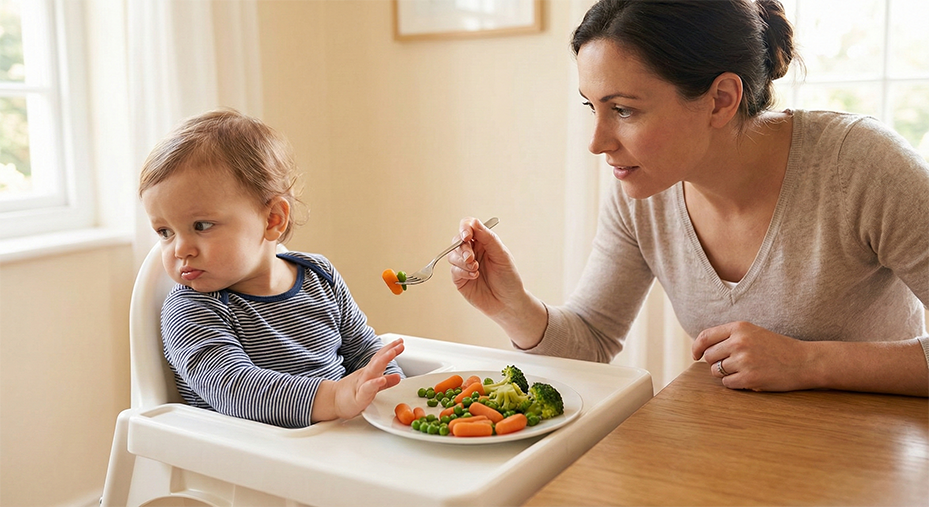
It is one of the most common and stressful complaints among parents: “My child just won’t eat!” You spend time preparing a nutritious meal, only for your toddler to turn their head away, push the plate, or eat just two bites before declaring they are “full.” It is completely natural to worry that they aren’t getting enough nutrients to grow.
However, in most cases, this is a normal phase of childhood development and not a serious medical issue.
In this guide, we will explore why your child might be eating less and provide actionable, stress-free strategies to make mealtimes enjoyable again.

Understanding Your Child’s Appetite
The first thing to remember is that every child is different. Adults often expect children to eat a consistent amount of food every day, but a child’s appetite fluctuates wildly. It depends on their age, how fast they are growing at that specific moment, and how physically active they have been that day.
If your child is energetic, meeting their developmental milestones, and maintaining a healthy weight curve (even if they seem to eat like a bird), they are likely getting exactly what they need.
Why Is Your Child Eating Less?
Before you panic, try to identify the underlying cause of their sudden drop in appetite:
- Teething: Swollen, sore gums make chewing painful.
- Minor Illnesses: A mild cold, sore throat, or upset stomach can temporarily wipe out their appetite.
- A Developmental Phase: Toddlers (ages 1-3) experience a natural slowdown in their growth rate compared to their first year of life, which means they physically need fewer calories.
- Snacking on “Empty Calories”: Too much milk, juice, or junk food between meals leaves no room for real food.
- Asserting Independence: Refusing food is one of the few ways a toddler can exert control over their environment.
What Should You Do? (Practical Strategies)
If mealtimes have become a battleground, here is how to call a truce and encourage healthier eating habits:
1. Never Force Them to Eat
This is the golden rule. Forcing, bribing, or punishing a child to eat creates anxiety around food. It turns mealtime into a negative experience and can lead to power struggles. Your job is to provide healthy food; their job is to decide how much to eat.
2. Serve “Toddler-Sized” Portions
Adult-sized portions can be incredibly overwhelming for a small child. Serve very small amounts initially—just a tablespoon of each food. If they finish it and want more, you can always offer a second helping.
3. Make Food Visually Appealing
Children eat with their eyes first. If a plate looks boring, they might reject it immediately.
- Use cookie cutters to make fun shapes out of sandwiches or fruits.
- Offer a “rainbow” of colorful vegetables.
- Serve healthy dips (like hummus or yogurt) alongside vegetables.
4. Establish a Routine
Children thrive on predictability. Try to serve three main meals and two small snacks at roughly the same times every day. Avoid letting them “graze” (snack continuously) throughout the day, so they actually feel hungry when mealtime arrives.
5. Limit Milk and Juice Before Meals
Drinks fill up tiny tummies very quickly. If a child drinks a large glass of milk or juice 30 minutes before dinner, they simply won’t have the physical space for a meal. Offer water between meals instead.
6. Eat Together as a Family
Children learn by mimicking adults. If they see you eating and enjoying a variety of healthy foods, they are much more likely to try them. Make the dining table a screen-free zone—turn off the TV and put away smartphones to focus on conversation and the food.
7. Encourage Physical Activity
A sedentary child won’t burn enough energy to feel hungry. Ensure they are getting plenty of active playtime, preferably outdoors. Running, jumping, and playing naturally stimulate the appetite.
When Should You See a Doctor?
While picky eating is usually a phase, you should consult your pediatrician if your child:
- Is losing weight or failing to gain weight over a period of months.
- Seems constantly lethargic, weak, or lacking energy.
- Frequently complains of stomach pain or vomits after eating.
- Chokes or gags constantly when trying to swallow.
- Is surviving on fewer than 3 or 4 specific foods.
The Most Important Takeaway
Sometimes, a parent’s expectations of how much a child should eat simply don’t match the child’s actual physical needs.
If your child is healthy and active, take a deep breath. Remove the pressure, offer a variety of nutritious options, and trust that they will eat what their body needs. Building healthy eating habits is a marathon, not a sprint.
⚠️ Disclaimer:
This article is for general informational and educational purposes only. It is not intended to be a substitute for professional medical advice, diagnosis, or treatment. Always consult your pediatrician regarding your child’s specific nutritional needs and growth.