When we hear the word “Cancer,” our hearts usually skip a beat. For many of us, that one word carries a heavy weight—it’s often synonymous with a death sentence. We’ve seen it in old movies, heard it in tragic family stories, and the fear has become deeply rooted in our minds.
But here is the truth I want to share with you today, friend: Cancer does NOT equal death.
In the world we live in today, medicine has advanced by leaps and bounds. Because of modern technology, increased awareness, and early detection, millions of people worldwide are not just surviving cancer—they are thriving, living full, happy, and normal lives after their diagnosis.
If you or a loved one is facing this, let’s take a deep breath together and break down some of the myths that cause unnecessary fear.
What Exactly is Cancer? (Without the Scary Jargon)
To fight the fear, we first need to understand what we are dealing with. Simply put, cancer happens when some cells in the body start growing abnormally and lose their “off switch.”
In a healthy body, cells grow and divide as needed. But with cancer, these abnormal cells keep multiplying. They can:
- Damage surrounding tissues.
- Sometimes travel to other parts of the body.
However, here is the catch: Not all cancers are the same. Every type of cancer has its own “personality,” its own location, and its own stage. Because of this, the treatment and the outcome are different for everyone. It is not a “one size fits all” disease.
Myth 1: A Cancer Diagnosis is a Death Sentence
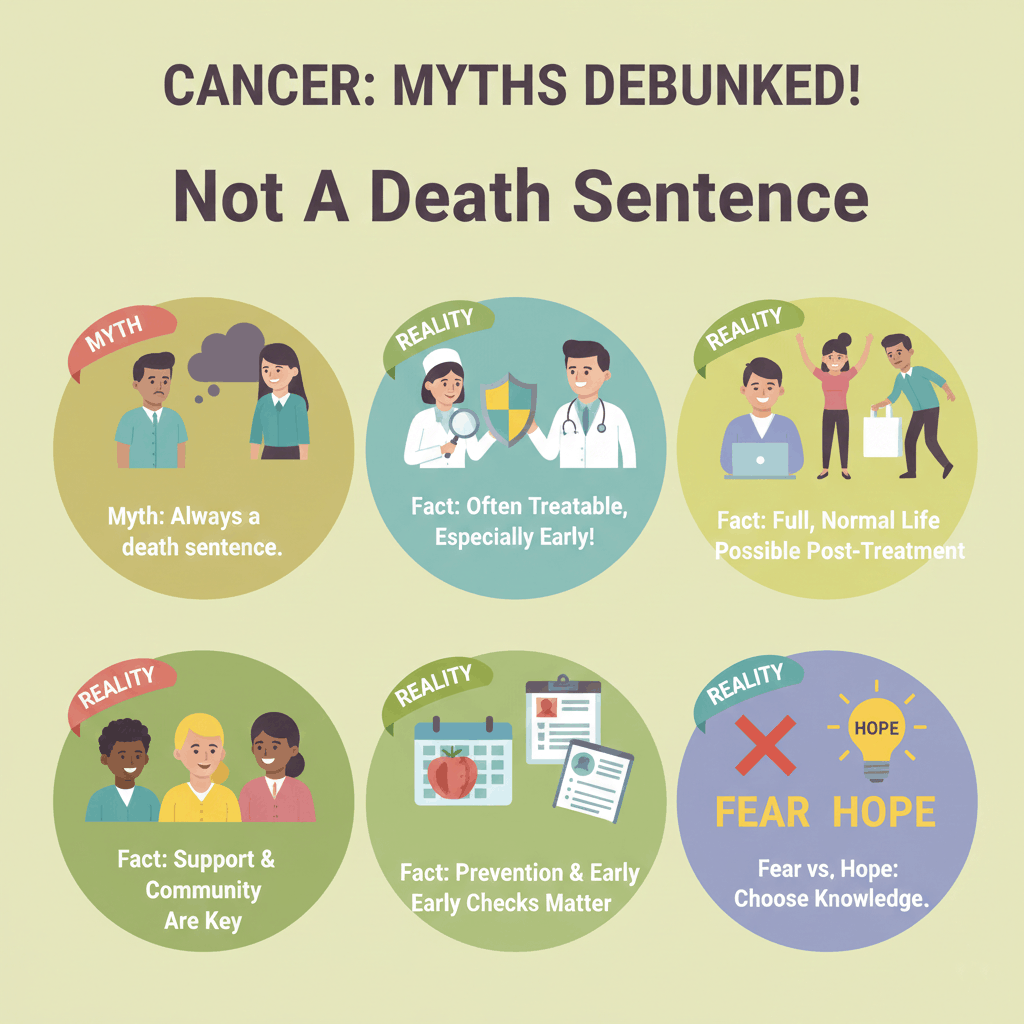
This is perhaps the biggest and most damaging lie out there. It’s the myth that stops people from even getting tested because they are too afraid of what they might hear.
The Reality: Many types of cancer are now highly treatable, and in many cases, completely curable. Especially when:
- The cancer is caught in the early stages.
- Treatment starts immediately and correctly.
Today, the survival rates for breast cancer, prostate cancer, and thyroid cancer have reached incredible highs. People aren’t just “holding on”—they are getting better and moving on with their lives.
Myth 2: Life Will Never Be “Normal” Again
People often think that once you have cancer, you will be a “patient” forever, stuck in a hospital bed or too weak to do anything.
The Reality: I have seen so many survivors finish their treatment and go right back to what they love. They:
- Return to their careers and excel.
- Take care of their families and see their kids grow up.
- Travel the world and enjoy hobbies.
Yes, treatment can be a tough season. It’s a mountain to climb, and there will be days when you feel exhausted. But once that mountain is climbed, there is a whole world waiting on the other side. Life after cancer can be just as beautiful—and sometimes even more cherished—than it was before.
Myth 3: Cancer Treatment is Always Torture
We’ve all seen the old portrayals of chemotherapy where patients are constantly miserable. While I won’t tell you that treatment is a walk in the park, it has changed drastically over the last decade.
The Reality: Modern medicine is much smarter now. Treatments today are:
- More Precise: Targeted therapies attack the cancer cells specifically, leaving healthy cells alone.
- Fewer Side Effects: Doctors are now much better at managing nausea, pain, and fatigue.
- Patient-Focused: The goal isn’t just to kill the cancer; it’s to keep the patient’s quality of life as high as possible.
Why Are We So Afraid?
If the reality is so hopeful, why do we still tremble at the word? It’s usually because of:
- Outdated Information: We are still carrying the fears of 30 or 40 years ago.
- Lack of Awareness: We don’t hear enough about the millions who survived.
- Late Detection: In the past, people only went to the doctor when it was too late. This created the false idea that “no one survives cancer.”
This fear is actually the most dangerous part of the disease. Why? Because fear makes people procrastinate. They ignore symptoms because they are afraid of the truth, and by doing so, they miss the window where the cancer is most treatable.
The Power of Early Detection
I cannot stress this enough: Time is your greatest ally. When cancer is caught early:
- The treatment is usually much simpler and less aggressive.
- The chances of the cancer spreading are minimized.
- The success rate skyrockets.
This is why regular check-ups and being “body-aware” are so important. You know your body better than anyone else. If something feels “off,” don’t let fear keep you home. Go find out. Most of the time, it’s nothing—but if it is something, you’ll be glad you caught it early.
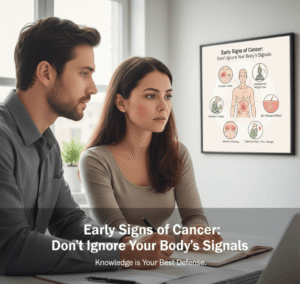
Common Early Warning Signs to Watch For
While these symptoms can be caused by many non-cancerous issues, it’s always worth a conversation with your doctor if you notice:
- An unusual lump or thickening anywhere in the body.
- Unexplained weight loss (dropping pounds without trying).
- Constant, heavy fatigue that doesn’t go away with rest.
- Sores or wounds that refuse to heal.
- Unusual bleeding or discharge.
Again, having these symptoms doesn’t mean you have cancer, but they are your body’s way of saying, “Hey, let’s get this checked out.”
The Underrated Role of Mental Strength
When fighting cancer, the medicine does the physical work, but your mind does the heavy lifting. A positive, “can-do” attitude doesn’t magically cure the disease, but it does:
- Help you stay disciplined with your treatment.
- Keep your immune system in better shape by lowering stress.
- Improve your overall quality of life during the journey.
And you don’t have to be “brave” all the time. It’s okay to be scared. But having the support of friends, family, or a support group can turn that fear into a fighting spirit.
Can We Prevent Cancer?
We can’t prevent every case of cancer—sometimes it’s just genetics or bad luck. However, we can significantly lower our risks. It’s about building a “health shield” through:
- Quitting Tobacco: This is the single biggest thing you can do for your lungs and health.
- Eating Real Food: More greens, more fruits, less processed junk.
- Moving Your Body: Just 30 minutes of walking can do wonders.
- Sun Protection: Wear that sunscreen!
- Limiting Alcohol: Moderation is key.
Conclusion: Let’s Start Talking
The best way to kill fear is to bring it into the light. We need to talk about cancer openly. It isn’t a “shameful” secret; it’s a medical condition. When we talk, we share information. When we share information, we save lives.
Cancer is a chapter in some people’s lives, but it doesn’t have to be the end of the book. With the right treatment, a bit of courage, and early action, the story can go on for a very, very long time.
Stay aware, stay hopeful, and take care of yourself.
⚠️ Disclaimer: This article is for general health awareness only and is not a substitute for professional medical advice. If you have any symptoms or concerns, please consult a qualified doctor or oncologist immediately.