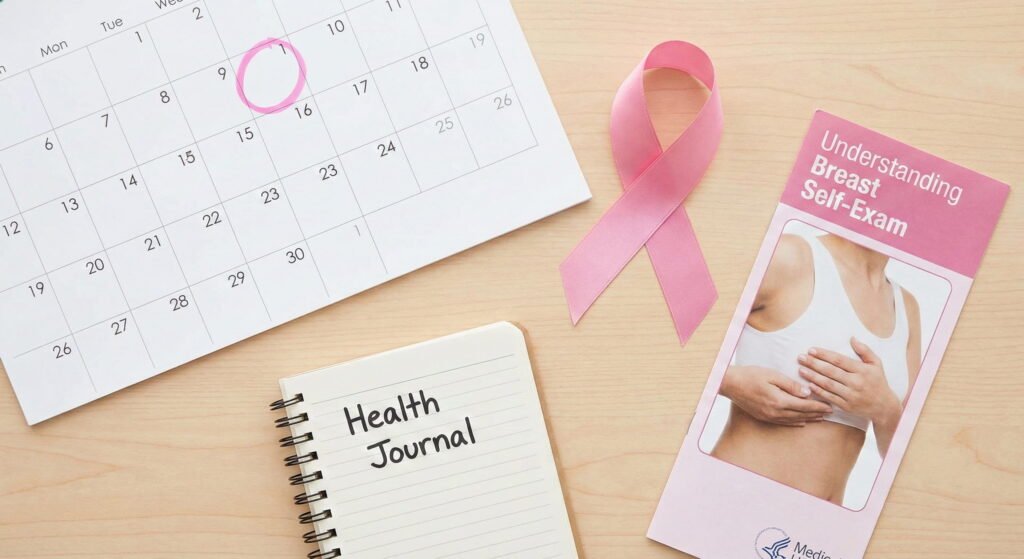
Performing a breast self-examination (BSE) is a simple yet vital habit that empowers women to take charge of their health. It is about becoming familiar with your own body.
While a self-exam is not a substitute for professional medical check-ups or mammograms, doing it regularly helps you understand what is “normal” for your breasts. This awareness makes it much easier to notice any unusual changes quickly.
In this guide, we will walk you through exactly how to perform a breast self-examination correctly.

Why Is Self-Examination So Important?
The primary goal of a BSE is breast awareness.
- Knowing the normal look and feel of your breasts is crucial.
- If a new change occurs, you will be the first to notice it.
- Detecting changes early often leads to easier and more effective treatment options.
When Is the Best Time to Examine?
Timing matters for accuracy, as hormone levels affect breast tissue.
- For women who menstruate: The best time is 5 to 7 days after your period ends. During this window, your breasts are least likely to be swollen or tender.
- For post-menopausal women: Choose a specific day that is easy to remember (like the 1st or 15th of every month) and stick to it.
How to Perform the Examination (The 3 Steps)
A thorough breast self-examination is typically done in three stages: looking, touching while standing, and touching while lying down.
Step 1: Visual Inspection in Front of a Mirror
Stand straight in front of a mirror with good lighting. Start with your arms relaxed at your sides. Look closely at your breasts for:
- Any changes in size, shape, or symmetry.
- Dimpling, puckering, or bulging of the skin.
- Redness, soreness, or a rash.
- A nipple that has turned inward (inverted) instead of sticking out.
Next: Raise your arms high overhead and look for the same changes.
Step 2: Physical Exam While Standing (or in the Shower)
Many women find it easier to do this step in the shower when the skin is slippery with soap.
- Use the flat pads (not the tips) of your three middle fingers.
- Use light pressure and move your fingers in small circular motions.
- Cover the entire breast area, moving from the outer edge toward the nipple.
- Crucial: Don’t forget to check the armpit (axilla) area as well, as breast tissue extends there.
- Repeat the process on both sides.
Step 3: Physical Exam While Lying Down
When lying flat, the breast tissue spreads out evenly, making it easier to feel deeper structures.
- Lie flat on your back.
- To examine your right breast, place a small pillow under your right shoulder and put your right hand behind your head.
- Use your left hand to feel your right breast, using the same circular motions as in Step 2. Make sure to cover the entire area, from collarbone to ribs and armpit to cleavage.
- Repeat the entire process for your left breast using your right hand.
What Should You Look For?
During the exam, be alert for:
- Any new lumps or thickening in the breast or underarm area.
- A hard knot or spot that feels different from the surrounding tissue.
- Unusual pain in one specific spot that doesn’t go away.
- Any spontaneous discharge (fluid) from the nipple.
Important: Finding a lump does not automatically mean cancer. Many breast changes are benign (non-cancerous). However, if you find anything new or unusual, you must show it to your doctor immediately.
How Long Does It Take?
The entire process usually takes only 5 to 10 minutes. Once you make it a habit, it becomes quick and easy.
A Vital Reminder
A Breast Self-Examination is a tool for awareness. It is a complement to, not a replacement for, regular clinical breast exams by a doctor and screening mammograms. Always follow your doctor’s recommendations for professional screenings based on your age and risk factors.
Conclusion
Becoming aware of your own body is a great confidence booster for your long-term health. Make it a habit to check yourself once a month. If you notice any unusual changes, do not delay—consult your physician right away.
⚠️ Disclaimer:
This article is for general health awareness purposes only and is not a substitute for professional medical advice, diagnosis, or treatment. Always seek the advice of your physician regarding any unusual symptoms or changes you detect.