What Is Burnout? And How to Know If You’re Going Through It
Let’s have an honest conversation.
Have you been feeling… off lately?
Not sick, exactly. Just… tired. Deep down tired. The kind of tired that sleeping in on Sunday doesn’t fix. The kind where even things you used to enjoy feel like chores.
If that sounds familiar, you might be experiencing something called burnout.
And here’s the thing—burnout is real. It’s not “just stress.” It’s not “being lazy.” It’s your body and mind waving a white flag, saying, “I can’t do this anymore.”
So today, let’s talk about what is burnout, how to spot it, and what to do about it. No complicated psychology. Just simple, friendly talk.
First: What Is Burnout, Really?
In simple words?
Burnout is what happens when you’re under too much pressure for too long. It’s like running a race that never ends. Eventually, you just… collapse. Not physically (though that can happen too). But mentally and emotionally.
The World Health Organization actually calls it an “occupational phenomenon.” Fancy term, simple meaning: Work and life stress piled up so much that you couldn’t recover.
Burnout isn’t about having a bad week. It’s about months (or longer) of feeling:
- Exhausted all the time
- Mentally distant from everything
- Like nothing you do is good enough
It creeps up slowly. You don’t wake up one day “burned out.” It builds, little by little, until suddenly you realize you’re not yourself anymore.
Burnout vs. Normal Tiredness
Let’s clear this up because it’s important.
Normal tiredness: You had a long day. You’re sleepy. You rest, sleep well, and wake up fresh. Back to normal.
Burnout: You’re tired even after sleeping. You wake up and already feel drained. The thought of Monday makes your chest feel heavy. Rest doesn’t fix it.
See the difference?
Burnout isn’t about needing more sleep. It’s about needing a break from… everything.

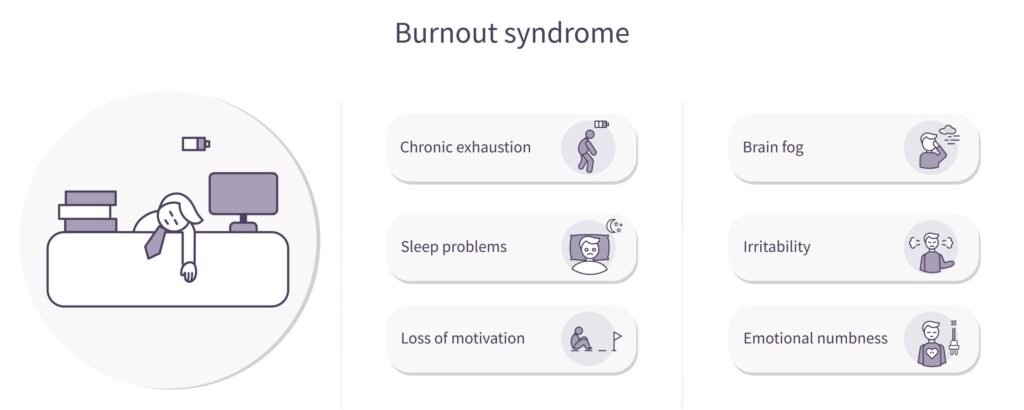
7 Signs You Might Be Burned Out
Okay, let’s get real. Read these signs and see if any hit close to home.
1. You’re Exhausted. Like, All the Time.
Not just physically tired. Mentally tired. Emotionally tired.
You wake up after 8 hours of sleep and still want to pull the blanket over your head. Getting out of bed feels like a task. Your body feels heavy. Your brain feels foggy.
This is the #1 sign of burnout—exhaustion that doesn’t go away.
2. Nothing Feels Interesting Anymore
Remember when you used to enjoy things? Hobbies? Meeting friends? Watching your favorite show?
Now? Meh.
Everything feels like effort. Things that once brought you joy now feel like “one more thing to do.” You might cancel plans just to sit alone—not because you want to, but because you have zero energy for people.
3. You’re Irritable and Snappy
Small things annoy you now.
Someone asks a simple question? You feel irritated. Traffic? You want to scream. Your phone pings? Ugh.
You might snap at family, colleagues, or friends without meaning to. Later you feel guilty, but in the moment, you just can’t control it.
This isn’t “bad mood.” This is your brain being overloaded.
4. You Can’t Focus
Reading the same email three times. Forgetting what you were about to do. Sitting at your desk but getting nothing done.
Burnout messes with your concentration. Your brain is so tired that it can’t process information properly. You feel scattered. Work takes longer. Mistakes happen.
5. You Feel Like You’re Not Good Enough
This one hurts.
You start feeling like nothing you do matters. Like you’re failing at everything. Like everyone else is managing life better than you.
You might think: “I’m not working hard enough.” “I’m so lazy.” “Everyone must think I’m useless.”
But here’s the truth: It’s not you. It’s burnout talking.
6. Your Sleep or Eating Habits Change
Some people can’t sleep when burned out—mind keeps racing. Others sleep too much—escaping from life.
Same with food. Some lose appetite completely. Others binge eat (especially junk) for comfort.
If your routine around sleep or food has changed without reason, burnout could be the hidden cause.
7. You Feel Distant from Everything
Ever feel like you’re just… going through the motions?
You’re at work, but not really there. You’re with family, but your mind is somewhere else. Life feels like you’re watching it from behind glass.
This is called detachment. It’s your mind’s way of protecting itself from too much stress. But it also makes you feel empty.
Who Gets Burnout?
Anyone, really. But some people are more at risk:
- People with huge workloads (long hours, no breaks)
- Perfectionists (who can never say “this is good enough”)
- Caregivers (parents, nurses, teachers—people who give constantly)
- Anyone with poor work-life balance
- People who feel like they have no control over their schedule
If this sounds like you, pay attention.
What to Do If You’re Burned Out
Okay, so you read the signs and thought, “Uh oh, that’s me.”
First: Breathe. You’re not broken. This is fixable.
Here’s what helps:
1. Take Real Breaks
Not “checking Instagram while eating lunch at your desk.” Real breaks.
Step away from work. Go for a walk. Sit somewhere quiet. Take a day off (or a few) if possible. Your brain needs actual rest, not just “less work.”
2. Set Boundaries
This is huge.
Stop saying yes to everything. Stop answering emails at 10 PM. Stop letting work invade your personal time.
You are allowed to say: “I can’t take that on right now.” “I need to leave on time today.”
Boundaries protect your energy.
3. Talk to Someone
Burnout loves silence. When you keep it inside, it grows.
Talk to a trusted friend, family member, or colleague. Just saying “I’m struggling” out loud can lift some weight.
If work is the cause, consider talking to your manager (if safe). Sometimes they can adjust things.
4. Prioritize Sleep and Food
When burned out, we often neglect basics. We survive on coffee and skip meals.
Try to:
- Go to bed at a reasonable time
- Eat real food (vegetables, protein, not just carbs)
- Drink water (dehydration makes everything worse)
Your body needs fuel to recover.
5. Do Something Just for You
Remember things you loved before? Try one. Even for 15 minutes.
Read a book. Listen to music. Go for a walk without a destination. Paint. Cook something fun.
This isn’t “wasting time.” This is refilling your tank.
6. Consider Professional Help
If burnout is severe—if you feel hopeless, can’t function, or have thoughts of harming yourself—please talk to a therapist or counselor.
There’s zero shame in this. Burnout is real, and professionals know how to help.
When Will I Feel Better?
Healing from burnout takes time.
You didn’t get burned out in a day, and you won’t recover in a day. Be patient with yourself. Some days will feel better, some worse.
But slowly, with rest and changes, you’ll start feeling like yourself again.
Final Thoughts (From Someone Who’s Been There)
I’ve been burned out before. The kind where you cry on Sunday evenings just thinking about Monday. The kind where you feel guilty for resting because “you should be working.”
And here’s what I learned:
You are not a machine. You’re a human. Humans need rest. Humans need breaks. Humans need joy.
If you’re reading this and thinking, “Wow, this is me,” please take it seriously. Listen to what your body and mind are telling you.
You don’t have to earn rest. You don’t have to prove you’re tired enough. You’re allowed to slow down. Right now. As you are.
Take care of yourself, okay? You matter. ❤️
Quick Summary:
| Sign of Burnout | What It Feels Like |
|---|---|
| Constant exhaustion | Tired even after sleep |
| Loss of interest | Nothing feels enjoyable |
| Irritability | Snapping at small things |
| Poor focus | Can’t concentrate |
| Feeling inadequate | “I’m not good enough” |
| Sleep/food changes | Too much or too little |
| Detachment | Going through motions |
Disclaimer:
This is friendly advice based on general mental health awareness. I’m not a therapist or doctor. If you’re struggling with severe burnout or mental health issues, please reach out to a qualified professional.