It seems like the most basic thing in the world: washing your hands. We do it automatically, often without thinking. But here is the reality—handwashing is one of the most powerful tools we have to protect our health, yet many of us are doing it wrong.
Think about your day. Your hands touch countless surfaces—door handles, mobile phones, money, elevator buttons, stair railings. These surfaces are often invisible breeding grounds for germs, bacteria, and viruses.
If you don’t wash your hands correctly, those germs don’t just disappear. They stay on your skin and eventually find their way into your body when you touch your eyes, nose, or mouth.
In this guide, we will explore why this simple habit is so critical and, most importantly, the exact steps to ensure your hands are truly clean.

Why Is Handwashing So Urgent?
Our hands are the primary carriers of disease-causing germs. When we neglect hand hygiene, we open the door to a wide range of illnesses.
The Centers for Disease Control and Prevention (CDC) refers to handwashing as a “do-it-yourself vaccine.” It is essential for preventing the spread of:
- Diarrheal diseases (like Salmonella and E. coli).
- Respiratory illnesses (like the common cold, flu, and Coronavirus).
- Food poisoning.
- Various viral and bacterial infections.
By keeping your hands clean, you significantly lower your risk of getting sick and spreading germs to others.
The Critical Times: When Must You Wash Your Hands?
You can’t wash your hands every five minutes, but there are critical times when washing is non-negotiable to stop the chain of infection:
- Before eating or preparing food.
- After using the toilet (this is crucial!).
- After returning home from outside (work, school, shopping).
- Before and after caring for someone who is sick.
- After blowing your nose, coughing, or sneezing into your hands.
- After touching garbage or petting animals.
Making these moments a habit is key to staying healthy.
The Right Way to Wash Hands (Are You Missing a Spot?)
Rinsing your hands with water for three seconds is not washing your hands. Water alone won’t get rid of germs, especially those stuck in natural oils on your skin. You absolutely need soap.
Here is the scientifically proven, proper technique to ensure your hands are actually clean:
- Wet Your Hands: Start with clean, running water (warm or cold). Turn off the tap and apply soap.
- Lather Up: Rub your hands together with the soap. Be generous with the lather.
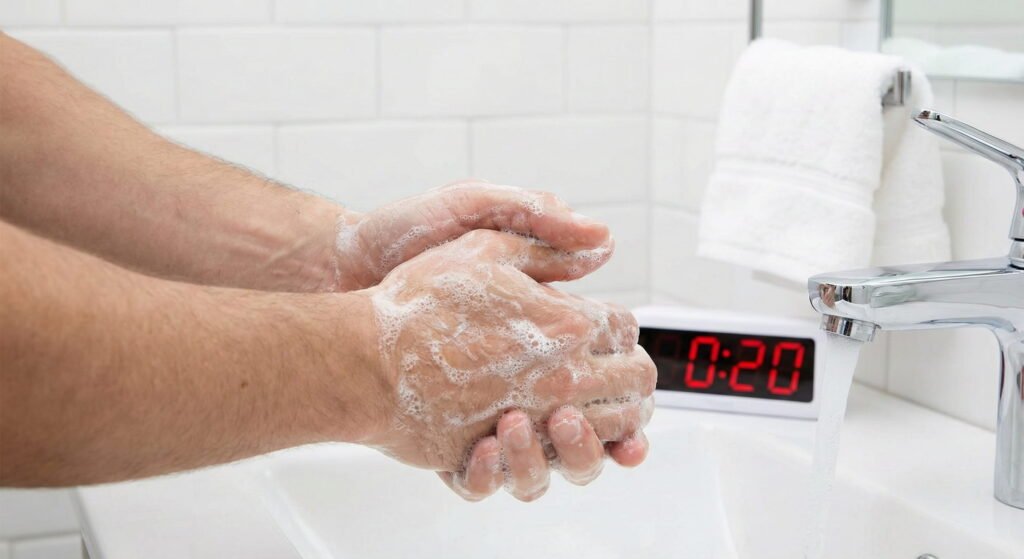
- The 20-Second Scrub: This is the most important part. You need to scrub for at least 20 seconds. (Tip: Hum the “Happy Birthday” song twice from beginning to end).
- Don’t Miss Anywhere: It’s not just about the palms. You must scrub:
- The back of your hands.
- Between your fingers (interlace them).
- Under your fingernails (germs love to hide here!).
- Rinse Well: Hold your hands under clean, running water to rinse off all the soap and dirt.
- Dry Completely: Germs spread more easily on wet hands. Dry your hands thoroughly using a clean towel, a paper towel, or an air dryer.
What If There Is No Soap and Water?
Sometimes you are on the go and can’t get to a sink. In these situations, an alcohol-based hand sanitizer is a good backup.
- Make sure the sanitizer contains at least 60% alcohol.
- Apply the gel to the palm of one hand.
- Rub your hands together, covering all surfaces of your hands and fingers, until your hands are dry (this takes about 20 seconds).
Important Note: Sanitizers do not get rid of all types of germs, and they may not be as effective when hands are visibly dirty or greasy. Soap and water are always the best option.
Why It’s Crucial for Children
Kids are naturally curious and active. They play on the floor, share toys, and constantly put their hands in their mouths. This makes them magnets for germs.
Teaching children proper handwashing habits from a young age is vital. It significantly reduces the spread of infections in schools and daycare centers, keeping your child—and your whole family—healthier.
Protecting More Than Just Yourself
Hand hygiene isn’t just a personal choice; it’s a community responsibility. When you wash your hands, you aren’t just protecting yourself. You are protecting your family, your colleagues, and vulnerable people in your community (like the elderly or those with weak immune systems).
One person’s carelessness in not washing their hands after using the restroom can spread illness to dozens of others.
Conclusion
Handwashing is a small, simple act, but its impact on public health is massive. It is the single most effective, easiest, and cheapest way to prevent the spread of infection and stay healthy.
Don’t rush it. Take those 20 seconds, use soap, and do it right. Your health is worth the extra effort.
⚠️ Disclaimer:
This article is for general informational and educational purposes only and is not a substitute for professional medical advice. If you have symptoms of an infection, please consult a doctor immediately.