Food Poisoning Prevention: How to Eat Safe and Avoid the Stomach Ache
Let’s be real for a minute—there is nothing worse than looking forward to a delicious meal, enjoying it, and then spending the next 24 hours regretting it. We’ve all been there, haven’t we? That rumble in the stomach, the nausea, the “why did I eat that?” feeling.
Food poisoning is one of those things that is super common, but also completely miserable. It happens when we eat food that’s contaminated, spoiled, or just not cooked right. Sometimes, the food looks and smells totally fine, but it’s secretly hiding nasty bacteria that can wreck your week.
When it hits, you usually know it. The symptoms are pretty unmistakable:
- Vomiting (the worst part, honestly)
- Diarrhea
- Stomach cramps that make you want to curl into a ball
- Fever
But here is the good news: You don’t have to live in fear of your dinner. By making a few small, simple changes to how you handle food, you can drastically lower the risk of getting sick.
So, let’s chat about how to keep your kitchen safe and your tummy happy. Here are 9 easy ways to avoid food poisoning.
1. Wash Your Hands (Like You Mean It)
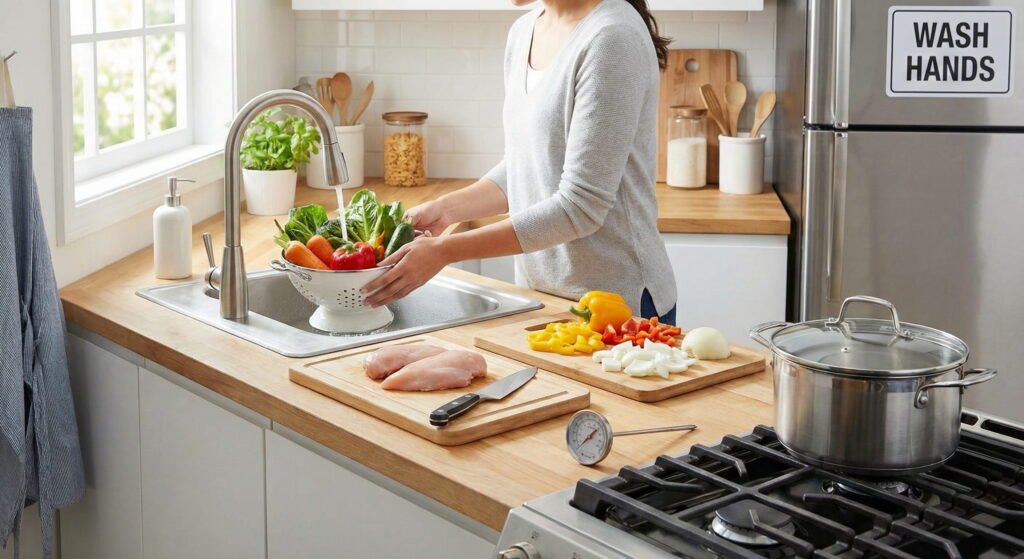
I know, I know. You’ve heard this a million times. But seriously, washing your hands is the absolute number one defense against food poisoning. Our hands touch everything—doorknobs, phones, pets—and then we go straight to touching our food.
Make it a strict rule to wash your hands before you start cooking and before you eat. But it’s even more important to wash them after doing certain things:
- Touching raw meat (this is a big one!)
- Using the toilet
- Coming in from outside
- Touching the garbage bin
Pro Tip: Don’t just splash some water and run. Use soap and scrub for at least 20 seconds. Sing “Happy Birthday” twice in your head if you have to. It makes a huge difference.
2. Keep Raw and Cooked Foods Separate
Imagine you are cutting up raw chicken on a cutting board. That raw chicken has bacteria on it (like Salmonella) that will die once you cook it. But if you take that same knife and unwashed cutting board and start chopping up lettuce for a salad… well, that bacteria just hitched a ride onto your lettuce. And you aren’t cooking the salad.
This is called “cross-contamination.” To avoid it:
- Use separate cutting boards for raw meat and fresh produce.
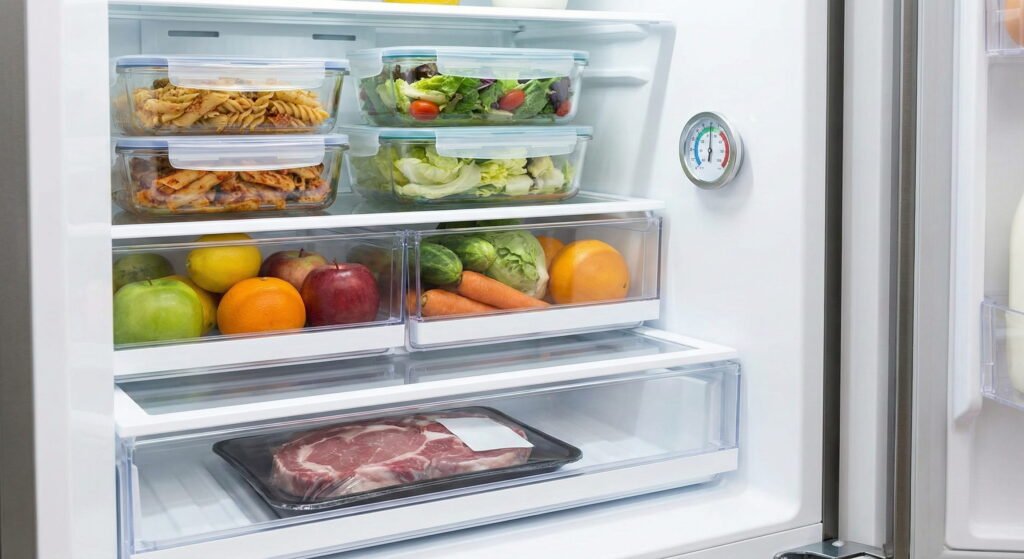
- Keep raw meat on the bottom shelf of your fridge so juices don’t drip onto other foods.
- Never put cooked food back on the same plate that held raw meat.
3. Cook Your Food thoroughly
We all like a good steak, but undercooked food is a playground for bacteria. Cooking food to the right temperature kills the germs that make us sick.
You need to be especially careful with:
- Meat (beef, pork, lamb)
- Poultry (chicken, turkey, duck)
- Fish and seafood
- Eggs (runny yolks are tasty, but risky if not pasteurized)
If you cook a lot of meat, honestly, get yourself a meat thermometer. It takes the guesswork out of it. You won’t have to wonder, “Is this chicken done, or is it going to kill me?”
4. Store Your Food the Right Way
Bacteria love the “Danger Zone.” No, that’s not a movie reference—it’s the temperature range between 40°F and 140°F (4°C – 60°C). In this zone, bacteria multiply like crazy.
So, the golden rule is: Keep hot foods hot and cold foods cold.
- Don’t leave cooked food sitting out on the counter for more than 2 hours. If it’s a hot summer day, make that 1 hour.
- Get leftovers into the fridge fast.
- Check your fridge temperature periodically to make sure it’s actually keeping things cold.
5. When in Doubt, Throw It Out
We all hate wasting food. It feels bad to throw away something you paid for. But is saving five dollars worth a trip to the hospital? Probably not.
If something in your fridge smells weird, looks slimy, or has a strange color, do not taste it to “check.” Just toss it. Also, keep an eye on expiration dates. Even if packaged food looks okay, if it’s way past the “use by” date, it’s safer to let it go.
6. Water Matters Too
Food poisoning doesn’t just come from solid food; it comes from water, too. Contaminated water is a huge culprit.
If you are cooking, washing vegetables, or just drinking a glass of water, make sure it’s from a clean, safe source. If you aren’t sure about the tap water quality in your area, use filtered or boiled water for cooking and washing ingredients.
7. Be Street Smart with Street Food
We all love street food or trying out new restaurants. It’s part of the fun of eating! But when you are eating out, you have less control over hygiene.
Be a little observant:
- Is the place clean?
- Is the food being served piping hot? (Hot food kills germs).
- Is the food covered, or is it sitting out exposed to flies and dust?
If a place looks dirty or the food looks like it has been sitting there all day, trust your gut and go somewhere else.
8. Wash Your Fruits and Veggies
You might think, “It’s just an apple, it’s natural!” But that apple has traveled a long way to get to you. It’s been touched by farm workers, packers, and other shoppers. Plus, it might have soil or pesticide residue on it.
Always rinse your fruits and vegetables under clean running water before you eat or cook them. For things with harder skins (like melons or cucumbers), give them a little scrub with a produce brush.
9. Extra Care for Vulnerable Groups
Food poisoning is annoying for a healthy adult, but it can be dangerous for others.
- Young children
- The elderly
- Pregnant women
- People with weak immune systems
If you are cooking for anyone in these groups, be extra strict about hygiene and cooking temperatures. Their bodies might not be able to fight off the infection as easily.
When Should You See a Doctor?
Most of the time, food poisoning goes away on its own after a day or two of misery. You just need to rest and drink plenty of fluids.
However, you should see a doctor if:
- The vomiting or diarrhea lasts more than a few days.
- You feel extremely weak or dizzy (signs of dehydration).
- You have a high fever (over 102°F or 39°C).
- You see blood in your stool.
- You can’t keep any liquids down.
The Bottom Line
Look, you don’t need to turn your kitchen into a science lab or scrub everything with bleach five times a day. Preventing food poisoning is mostly about building simple habits.
Wash your hands, separate your raw meats, cook things through, and pop leftovers in the fridge. That’s 90% of the battle right there.
Food is meant to be enjoyed, not feared. By being a little bit smarter about food safety, you can enjoy your meals without the worry. Stay safe and eat well!
⚠️ Disclaimer:
This article is for general informational and educational purposes only. It is not intended to be a substitute for professional medical advice, diagnosis, or treatment. Always seek the advice of your physician or other qualified health provider with any questions you may have regarding a medical condition. If you think you have severe food poisoning, please consult a doctor immediately.