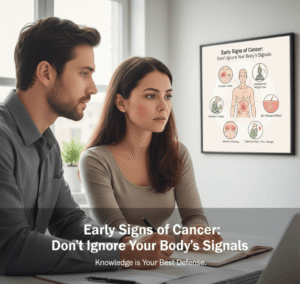
Let’s Talk About It: A Simple Guide to Breast Cancer Awareness
Let’s be honest for a second. When we hear the words “Breast Cancer,” most of us feel a sudden knot in our stomachs. It’s scary. It’s heavy. And for many women (and men too!), it’s a topic we’d rather push to the back of our minds.
But here is the truth: staying silent doesn’t help anyone. In fact, silence is often what makes things complicated.
Breast cancer is one of the most common health issues women face globally, yet so many of us hesitate to talk about it openly. Maybe it’s fear, maybe it’s shyness, or maybe it’s just thinking, “It won’t happen to me.” But because of this hesitation, many people delay getting checked, and that delay can make a huge difference.
The most important thing I want you to take away from this article is this: Finding it early changes everything.
Being “aware” doesn’t mean living in fear every day. It just means knowing your own body. It means being the boss of your own health. So, let’s break this down simply, like we’re just having a coffee and chatting. No complicated medical jargon—just real talk.
What Exactly Is Breast Cancer?
Okay, let’s strip away the scary medical terms. Our bodies are made up of tiny cells. Usually, these cells grow and divide in a controlled way. But sometimes, cells in the breast start growing abnormally and stop following the rules. When they grow out of control, that is what we call breast cancer.
Now, here is a massive misconception: Not every lump is cancer.
I repeat: Not every lump is cancer.
In fact, many lumps turn out to be benign (non-cancerous) cysts or other harmless tissue changes. But—and this is a big “but”—if you feel something new, a lump, or any weird change, you simply cannot ignore it. You need to get it checked to be sure.
Who Is Actually at Risk?
This is the part where people usually get nervous, but knowledge is power. The reality is that simply being a woman makes you eligible for breast cancer. It can happen to anyone. However, there are certain factors that might nudge the risk meter up a little bit.
Here are a few things that play a role:
- Getting Older: As we age, our risk naturally increases. It’s just how biology works.
- Family History: If your mom, sister, or grandmother had it, your risk might be higher. But remember, most women who get breast cancer actually don’t have a family history of it.
- Hormones: Long-term use of certain hormone treatments (like hormone replacement therapy) can sometimes play a part.
- Lifestyle Choices: Things like what we eat, how much we move, and habits like smoking.
A quick reality check: Even if you have zero family history and run marathons every day, you aren’t 100% immune. That’s why screening matters for everyone, not just those “at risk.”
What Should You Look For? (The Signs)
Everyone’s body is different. What looks normal for your best friend might not be normal for you. That’s why you need to know your normal.
Here are some common red flags to keep an eye on:
- New Lumps: A lump in the breast or even under the armpit. It might feel hard, like a pea or a marble.
- Shape Shifting: If one breast suddenly looks significantly different in size or shape than it used to.
- Skin Changes: Look for dimpling (kind of like the skin of an orange), puckering, redness, or scaly skin.
- Nipple Changes: If a nipple suddenly turns inward (becomes inverted) when it usually sticks out.
- Discharge: Any liquid coming from the nipple that isn’t breast milk (especially if it’s bloody or happens without squeezing).
Pro Tip: Don’t wait for pain. Breast cancer often doesn’t hurt in the early stages. If you see a change, even if it feels painless, get it checked.
Why Early Detection is the “Secret Weapon”
You hear doctors say “Early detection saves lives” all the time. But why?
Think of it like fixing a small leak in your roof. If you catch it when it’s just a drip, it’s an easy fix. If you ignore it until the ceiling caves in, it’s a major construction project.
When breast cancer is caught early (Stage 1 or 2):
- Treatment is usually much simpler and less aggressive.
- The cancer hasn’t had a chance to spread to other parts of the body.
- The survival rates are incredibly high.
Basically, checking yourself regularly gives you the upper hand.
How to Be Your Own Health Advocate
You don’t need a medical degree to take care of yourself. Here is a simple 3-step plan:
1. Know Your “Normal”
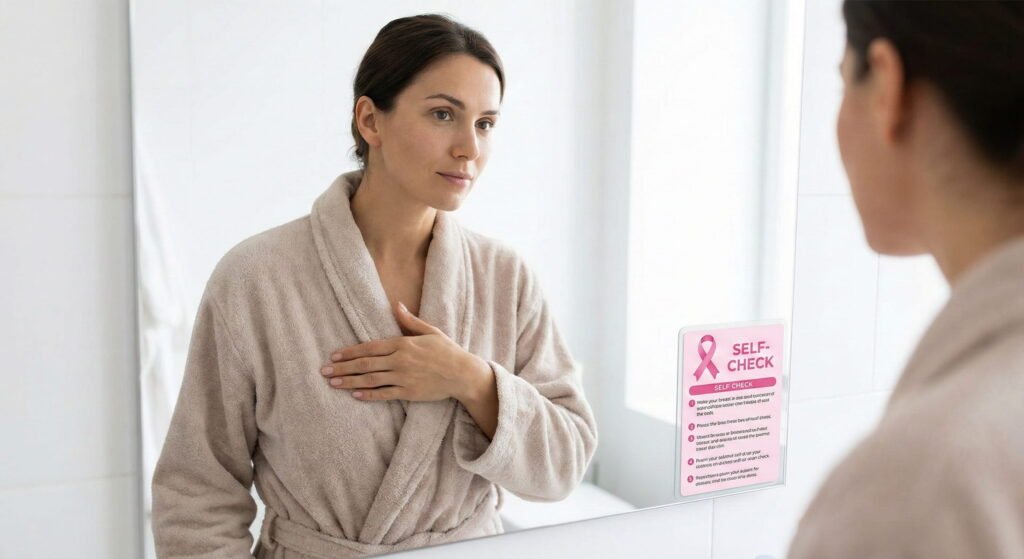
Stand in front of a mirror now and then. Look at your breasts. Know what they look like so you’ll notice if something changes.
2. The Monthly Self-Check
Make a habit of checking your own breasts once a month. The best time is usually a few days after your period ends when your breasts are less tender.
- Feel around while you are in the shower (soapy hands make it easier to feel lumps).
- Check while lying down on your bed.
- Use the pads of your fingers and move in a circular motion. Cover the whole breast and the armpit area.
3. See the Pros
Don’t skip your doctor visits. Depending on your age, you might need a mammogram (an X-ray of the breast).
- In your 20s and 30s: Clinical exams during your regular health checkups are usually enough unless you are high-risk.
- In your 40s and beyond: Talk to your doctor about starting annual mammograms.
Can Lifestyle Changes Really Help?
While we can’t control our genetics or our age, we can control what we do every day. No lifestyle change guarantees you won’t get cancer, but healthy habits can stack the odds in your favor.
Here is what helps (and honestly, these are good for your overall health anyway):
- Move Your Body: You don’t need to become an Olympic athlete. Just 30 minutes of brisk walking a day can help regulate hormones and boost your immune system.
- Watch Your Weight: Being overweight, especially after menopause, is linked to a higher risk.
- Eat Real Food: Focus on fruits, veggies, and whole grains. Try to cut down on processed junk.
- Rethink the Drink: Alcohol is linked to breast cancer risk. Limiting how much you drink is a smart move.
- Kick the Smoke: If you smoke, quitting is the best thing you can do for your entire body, not just your breasts.
The Mental Side: You Are Not Alone
We need to talk about the emotional side of this. Breast cancer—or even the fear of it—is mentally exhausting.
It’s not just a physical battle; it’s a mental one. This is why having a support system is crucial. Whether you are worried about a lump or going through treatment, lean on your family and friends. Join support groups. Talk to a therapist.
And for society? We need to stop whispering about breast cancer. The more we talk about it openly, the less scary it becomes for the woman who finds a lump tomorrow. She needs to know she isn’t alone.
A Final Message of Hope
If you take nothing else from this article, take this: Breast cancer is not a death sentence.
Medicine has come so far. Treatments today are miles ahead of where they were twenty years ago. Millions of women have faced this battle and are now living happy, healthy, normal lives. They are mothers, grandmothers, CEOs, and artists. They are survivors.
Don’t let fear stop you from checking yourself. Let hope and self-love drive you to take action.
Go look in the mirror today. Check yourself. And send this article to a friend you care about. It might just be the reminder they needed.
⚠️ Disclaimer:
This article is for general informational and educational purposes only. It is not intended to be a substitute for professional medical advice, diagnosis, or treatment. Always seek the advice of your physician or other qualified health provider with any questions you may have regarding a medical condition. Never disregard professional medical advice or delay in seeking it because of something you have read here.