7 Scientific Tips for Better Sleep (Backed by Research)
Good sleep is not just about feeling comfortable.
It’s one of the most important foundations of physical and mental health.
When you don’t get enough deep, quality sleep, you may notice:
- Poor concentration
- Irritability
- Low energy
- Mood swings
And over time, chronic sleep problems can increase the risk of serious health issues.
Many people treat sleep problems as something small — “It’s just one bad night.” But when it becomes regular, it starts affecting your body and mind more than you realize.
The good news?
You don’t need complicated solutions.
Here are 7 scientifically supported tips that can genuinely improve your sleep quality.
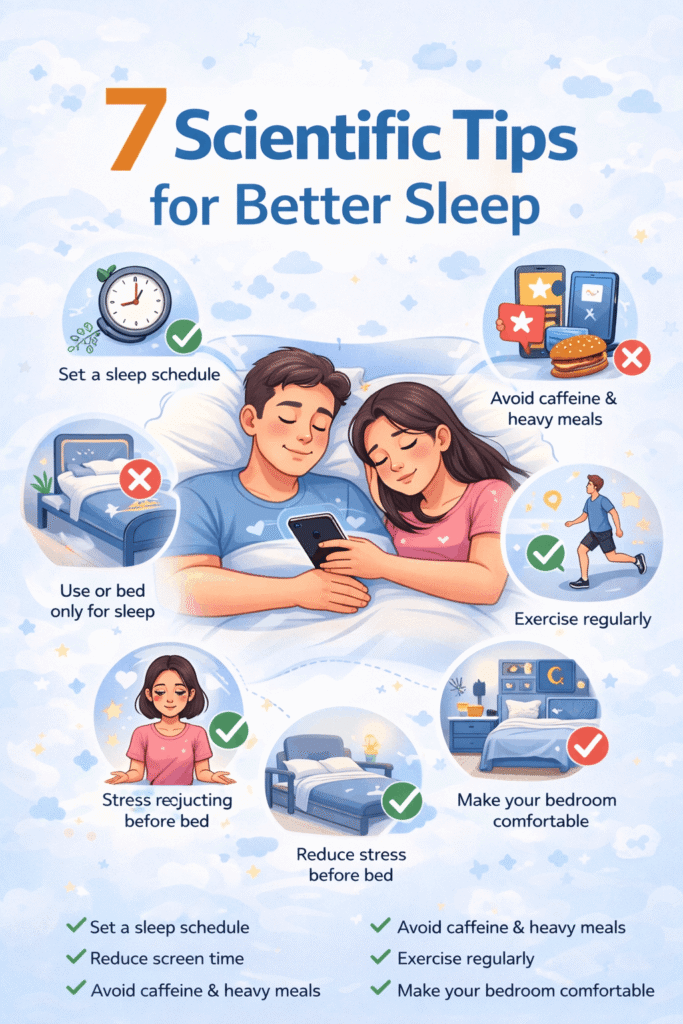
1. Sleep and Wake Up at the Same Time Every Day
Your body has a natural internal clock called the circadian rhythm.
When you go to bed and wake up at the same time daily:
- Your body learns when to feel sleepy
- You fall asleep faster
- Sleep becomes deeper and more refreshing
Even on weekends, try not to shift your schedule too much. Sleeping 3–4 hours extra on weekends may feel good, but it confuses your internal clock.
Consistency is more powerful than you think.
2. Reduce Screen Time Before Bed
This is one of the biggest sleep disruptors today.
Phones, tablets, laptops, and TVs emit blue light, which can interfere with melatonin — the hormone that helps you sleep.
If you scroll right before bed:
- Your brain stays active
- You feel less sleepy
- It takes longer to fall asleep
Try this instead:
- Stop using screens at least 1 hour before bedtime
- Read a physical book
- Listen to calm music
- Practice relaxation
Your mind needs time to slow down before sleep.
3. Avoid Caffeine and Heavy Meals at Night
Caffeine can stay in your body for 6–8 hours.
That afternoon coffee may still be affecting your sleep at night.
For better sleep:
- Limit caffeine after late afternoon
- Avoid strong tea or coffee in the evening
- Skip heavy, oily meals 2–3 hours before bed
Heavy meals make your digestive system work harder, which makes it difficult for your body to relax.
If you’re hungry, choose something light.
4. Exercise Regularly (But Not Right Before Bed)
Regular physical activity improves sleep quality significantly.
Even simple activities like:
- Walking
- Light jogging
- Stretching
- Home workouts
can help you fall asleep faster and sleep more deeply.
However, intense workouts right before bedtime can make you feel too energized.
The best time to exercise is earlier in the day or at least a few hours before sleep.
5. Make Your Bedroom Comfortable
Your sleep environment matters more than you think.
Your bedroom should be:
- Quiet
- Dark
- Cool and comfortable
Too much light, noise, or uncomfortable temperature can interrupt deep sleep.
Simple changes can help:
- Use blackout curtains
- Keep the room slightly cool
- Reduce noise
- Invest in a comfortable mattress and pillow
Your brain associates environment with behavior. A peaceful bedroom signals your body that it’s time to rest.
6. Develop a Stress-Reducing Night Routine
Stress is one of the biggest reasons people struggle with sleep.
If your mind is full of worries, it becomes difficult to relax.
Before bedtime, try calming activities like:
- Deep breathing exercises
- Light reading
- Meditation
- Prayer
- Writing down your thoughts
Even 10 minutes of relaxation can help calm your nervous system.
Remember, sleep starts in the mind.
7. Use Your Bed Only for Sleep
This is a simple but powerful habit.
If you regularly:
- Work in bed
- Watch videos in bed
- Scroll social media in bed
Your brain stops associating the bed with sleep.
Instead, train your brain by using the bed only for:
- Sleeping
- Resting
If you can’t fall asleep after 20–30 minutes, get up, do something calming, and return when you feel sleepy.
This strengthens the mental connection between bed and sleep.
When Should You See a Doctor?
Sometimes lifestyle changes are not enough.
You should consider professional advice if:
- You struggle to fall asleep for weeks
- You wake up frequently at night
- You feel extremely sleepy during the day
- You snore heavily or stop breathing during sleep
Chronic sleep problems should not be ignored.
Final Thoughts
Improving your sleep doesn’t require dramatic changes.
Small, consistent habits create the biggest impact.
- Stick to a schedule
- Reduce screen exposure
- Manage stress
- Create a comfortable environment
Good sleep is not a luxury — it’s a basic need.
When you sleep better, everything improves:
Your mood.
Your energy.
Your productivity.
Your overall health.
Think of sleep as the foundation of a healthy life.
⚠️ Disclaimer:
This article is for general health awareness only and does not replace medical advice. If you experience long-term sleep problems, consult a qualified healthcare professional.