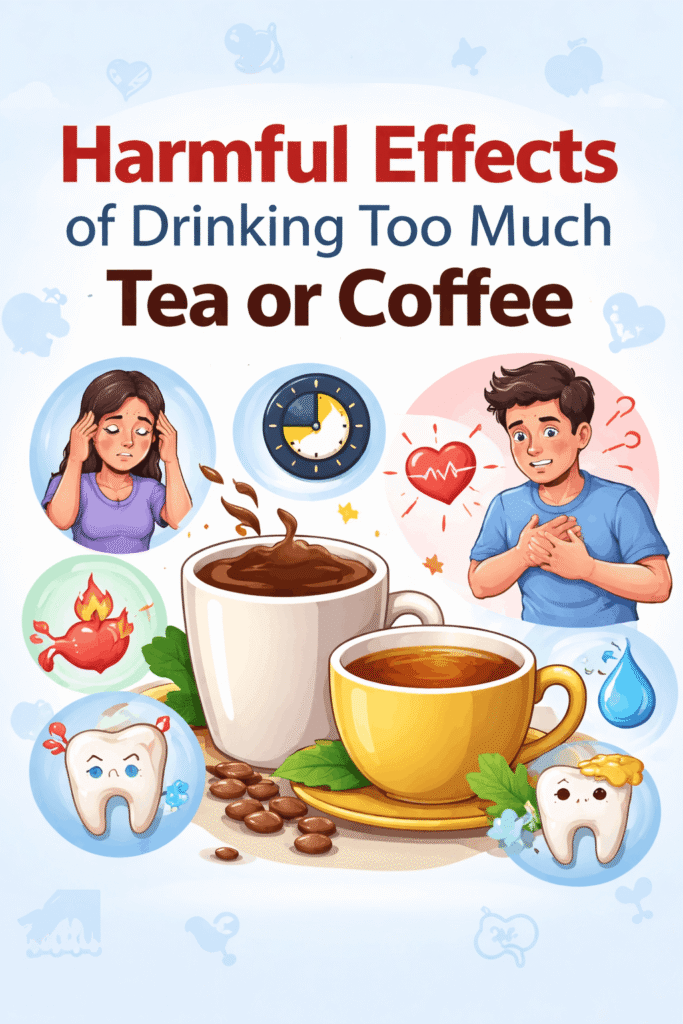
Harmful Effects of Drinking Too Much Tea or Coffee
Tea and coffee are among the most popular beverages in the world. For many of us, the day doesn’t truly begin without that first warm cup. And during long work hours, we often reach for another cup to fight off fatigue and stay focused.
In moderate amounts, tea and coffee aren’t harmful. In fact, they may even offer some benefits. But the real problem starts when “one cup” quietly turns into four or five every day.
So, what actually happens to your body when you drink too much tea or coffee?
Let’s talk about it in simple terms.
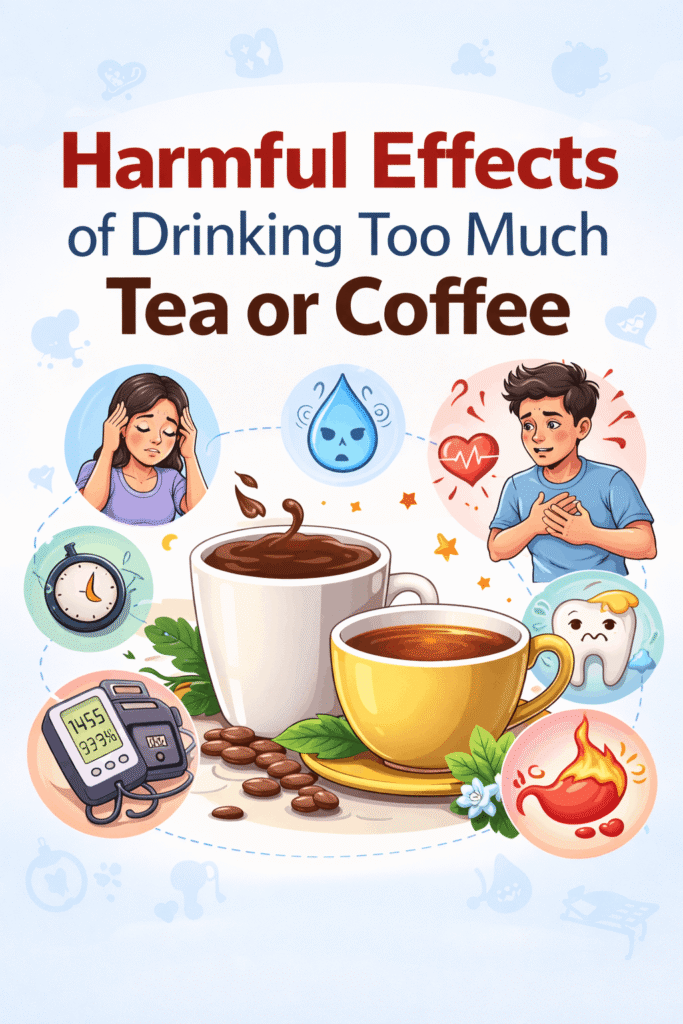
What’s Inside Tea and Coffee?
Both tea and coffee contain caffeine, a natural stimulant.
Caffeine temporarily makes your brain feel alert, active, and focused. That’s why you feel energized after drinking coffee. But when consumed in excess, caffeine can put pressure on both your body and your mind.
And that’s where the trouble begins.
1. Sleep Problems
One of the most common side effects of excessive caffeine is poor sleep.
If you drink too much tea or coffee, especially in the afternoon or evening, you may notice:
- Difficulty falling asleep
- Lighter, less restful sleep
- Waking up frequently during the night
Caffeine can stay in your body for several hours. So even if you drink coffee at 5 PM, it may still affect your sleep at night.
Over time, poor sleep can lead to fatigue, irritability, and reduced productivity. Ironically, this makes you crave even more coffee the next day — creating a cycle.
2. Increased Anxiety and Restlessness
Caffeine stimulates the nervous system. While that’s helpful in small amounts, too much stimulation can make you feel:
- Nervous
- Restless
- Jittery
- Overly alert
If you already struggle with anxiety, excessive tea or coffee can make symptoms worse. Some people even experience panic-like feelings after consuming too much caffeine.
If you’ve ever felt your hands shaking slightly after strong coffee, now you know why.
3. Rapid Heartbeat
Drinking too much coffee or tea may cause your heart rate to increase temporarily.
You might experience:
- Heart palpitations
- A pounding sensation in the chest
- Mild discomfort
For most healthy adults, this may not be dangerous. But if you have existing heart conditions, it’s important to be cautious with caffeine intake.
Listening to your body is key.
4. Stomach Problems and Acidity
Do you drink tea or coffee on an empty stomach? That might be causing trouble.
Excess caffeine can increase stomach acid production. This may lead to:
- Burning sensation in the stomach
- Gas
- Acid reflux
- Indigestion
People who already suffer from digestive issues often find that too much coffee makes things worse.
If you notice stomach discomfort after drinking coffee, it may be time to cut back.
5. Temporary Increase in Blood Pressure
Caffeine can cause a short-term rise in blood pressure in some individuals.
While this effect is usually temporary, regular excessive consumption may increase long-term health risks — especially if you already have high blood pressure.
If you’re monitoring your blood pressure, it’s wise to pay attention to your caffeine habits as well.
6. Caffeine Dependence
This is something many people don’t realize.
When you drink tea or coffee multiple times every day, your body can become dependent on caffeine.
If you suddenly stop, you may experience:
- Headaches
- Fatigue
- Irritability
- Difficulty concentrating
This doesn’t mean caffeine is “addictive” in a severe sense, but your body does get used to it. That’s why quitting suddenly can feel uncomfortable.
Gradual reduction works better.
7. Risk of Dehydration
Caffeine acts as a mild diuretic, meaning it can increase urination.
If you’re drinking several cups of tea or coffee but not enough water, you may become slightly dehydrated over time.
Symptoms may include:
- Dry mouth
- Headache
- Low energy
The solution is simple: balance caffeine intake with enough water throughout the day.
8. Tooth Staining and Dental Issues
Tea and coffee can stain your teeth over time. Dark-colored beverages tend to leave marks, especially if consumed frequently.
Also, if you add a lot of sugar to your drinks, it increases the risk of:
- Tooth decay
- Cavities
Good oral hygiene can help, but reducing excessive consumption makes a big difference.
How Much Tea or Coffee Is Safe Per Day?
Generally speaking:
👉 2–3 moderate cups per day are considered safe for most healthy adults.
However, caffeine tolerance varies from person to person. Some people feel anxious after just one cup, while others can handle more.
Special caution is needed for:
- Pregnant women
- People with heart conditions
- Individuals with anxiety disorders
- Those with high blood pressure
If you fall into any of these categories, consult a healthcare professional about your safe caffeine limit.
How to Reduce Tea and Coffee Intake
If you feel you’re drinking too much, don’t worry — you don’t have to quit overnight.
Here are some simple steps:
- Reduce the quantity gradually
- Avoid caffeine after late afternoon
- Try drinking it without sugar
- Replace one cup with herbal tea
- Increase your water intake
Small changes over time are more sustainable than sudden restrictions.

Final Thoughts
Tea and coffee are not your enemies. In moderation, they can even be enjoyable and beneficial.
But excessive caffeine consumption can slowly affect your sleep, mood, digestion, heart rate, and overall well-being.
Most of these problems don’t appear overnight. They build up gradually.
So instead of eliminating tea or coffee completely, focus on balance. Moderation is truly the key to staying healthy.
Your body will thank you for it.
⚠️ Disclaimer:
This article is for general health awareness purposes only and does not replace professional medical advice. If you experience ongoing health issues, consult a qualified healthcare provider.