Let’s be honest for a second. What is the first thing you do when you wake up? For most of us, we reach for our smartphones.
Our phones have become an extension of our hands. We use them for work, entertainment, social media, and connecting with loved ones. They are incredible tools. However, as a doctor, I am seeing a rising trend of patients coming in with headaches, vision problems, and anxiety—all linked to one common culprit: Excessive Screen Time.
If you spend hours scrolling through feeds, you might be hurting your body more than you realize. In this article, let’s explore exactly how your phone affects your eyes and your brain.
Why Do Screens Cause so Much Trouble?
Our bodies were not designed to stare at a small, bright light source for hours on end.
When you look at a phone, your eyes have to work extra hard to focus on the small text. At the same time, your brain is bombarded with a constant stream of information. This combination creates a “sensory overload” that leads to physical and mental fatigue.
Part 1: The Impact on Your Eyes
Have you ever felt your eyes burn after a long movie or a gaming session? That is your body sending you a warning signal.
1. The Blinking Problem (Dry Eyes)
Here is a fun fact: Normally, we blink about 15-20 times a minute. But when we stare at a screen, that number drops to just 5-7 times! Blinking is how your eyes stay moist and clean. When you stop blinking enough, your eyes become:
- Dry and gritty.
- Red and irritated.
- Prone to burning sensations.
2. Digital Eye Strain
This is a medical condition we call “Computer Vision Syndrome.” Imagine holding a heavy weight with your arm for an hour. Your muscle would hurt, right? The same happens to your eye muscles when they focus on a pixelated screen for too long. This leads to:
- Blurred vision.
- Difficulty focusing on distant objects.
- Persistent headaches behind the eyes.
3. The “Blue Light” Factor
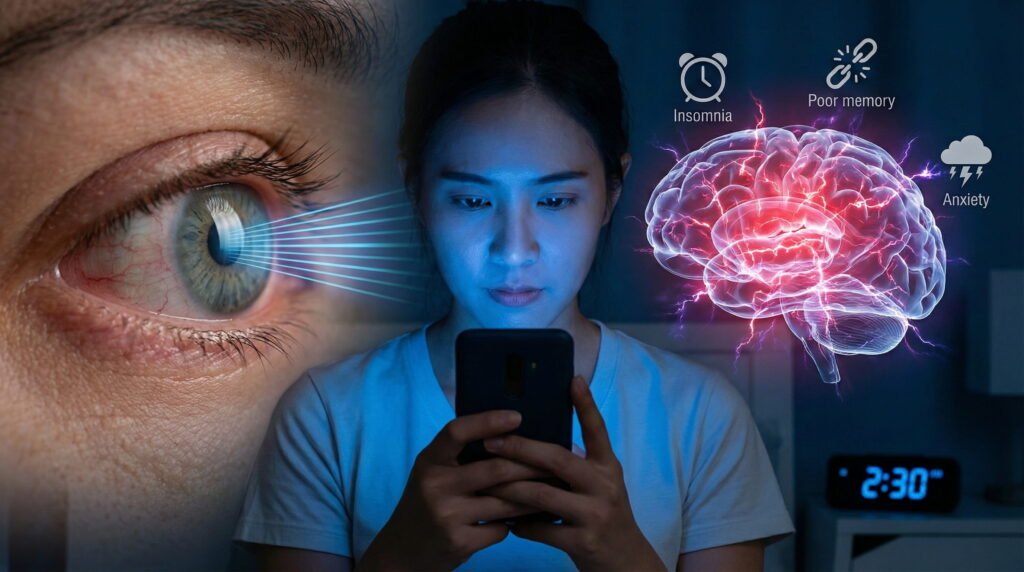
Mobile screens emit high-energy blue light. While not instantly blinding, long-term exposure—especially in the dark—can damage the retina cells over time. It puts unnecessary stress on your vision.
Part 2: The Impact on Your Brain
The damage isn’t just physical. Your smartphone is changing the way your brain functions.
4. The “Goldfish” Effect (Loss of Focus)
Social media is designed to be addictive. The constant “ping” of notifications, short videos (Reels/Shorts), and endless scrolling train your brain to have a short attention span.
- Memory Loss: You might find it harder to remember small details.
- Distraction: Deep thinking becomes difficult because your brain is always waiting for the next dopamine hit from the phone.
5. It Steals Your Sleep
This is the most common complaint I hear. “Doctor, I just can’t fall asleep.” The blue light from your phone tricks your brain into thinking it is still daytime. This stops the production of Melatonin (the sleep hormone). The result?
- You take longer to fall asleep.
- You wake up feeling tired, even after 8 hours.
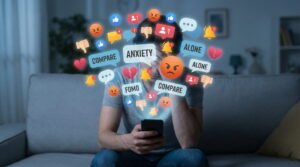
6. Anxiety and the Comparison Trap
Your phone is a window to everyone else’s “perfect” life. Constantly seeing others’ vacations and achievements can trigger feelings of inadequacy, anxiety, and depression. This is often called FOMO (Fear Of Missing Out). It keeps your brain in a state of low-level stress.
Special Note: Children and Teens
As a doctor, this worries me the most. A child’s brain is still developing. Excessive screen time at a young age can lead to:
- Delayed speech development.
- Social awkwardness.
- Aggressive behavior. Parents, please monitor your child’s screen time strictly.
How to Protect Yourself (Doctor’s Advice)
You don’t need to throw away your phone. You just need to use it smarter. Here are some simple hacks:
- The 20-20-20 Rule: Every 20 minutes, look at something 20 feet away for 20 seconds. This resets your eye muscles.
- Blink More: Make a conscious effort to blink when using your phone.
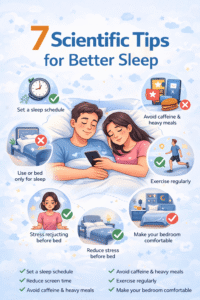
- No Phones Before Bed: Stop using screens at least 1 hour before sleeping. Read a book instead.
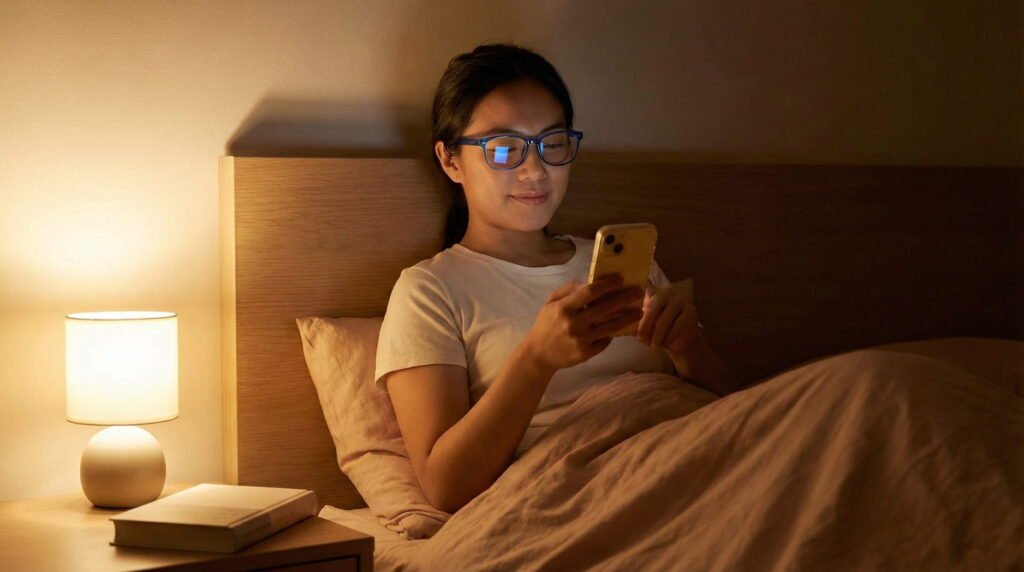
- Adjust Brightness: Never use your phone in a pitch-dark room. Keep the room light on, or use “Night Mode” / “Eye Comfort Shield” on your device.
Conclusion
Technology is a wonderful servant but a terrible master. Mobile phones are necessary for modern life, but your health is irreplaceable. A few small changes in your daily habits can save your eyes and your peace of mind.
Put the phone down for a while. Look at the real world. Your body will thank you.
⚠️ Medical Disclaimer: This article is for general awareness only and does not constitute medical advice. If you are experiencing severe eye pain, sudden vision loss, or chronic migraines, please consult an ophthalmologist or a neurologist immediately.