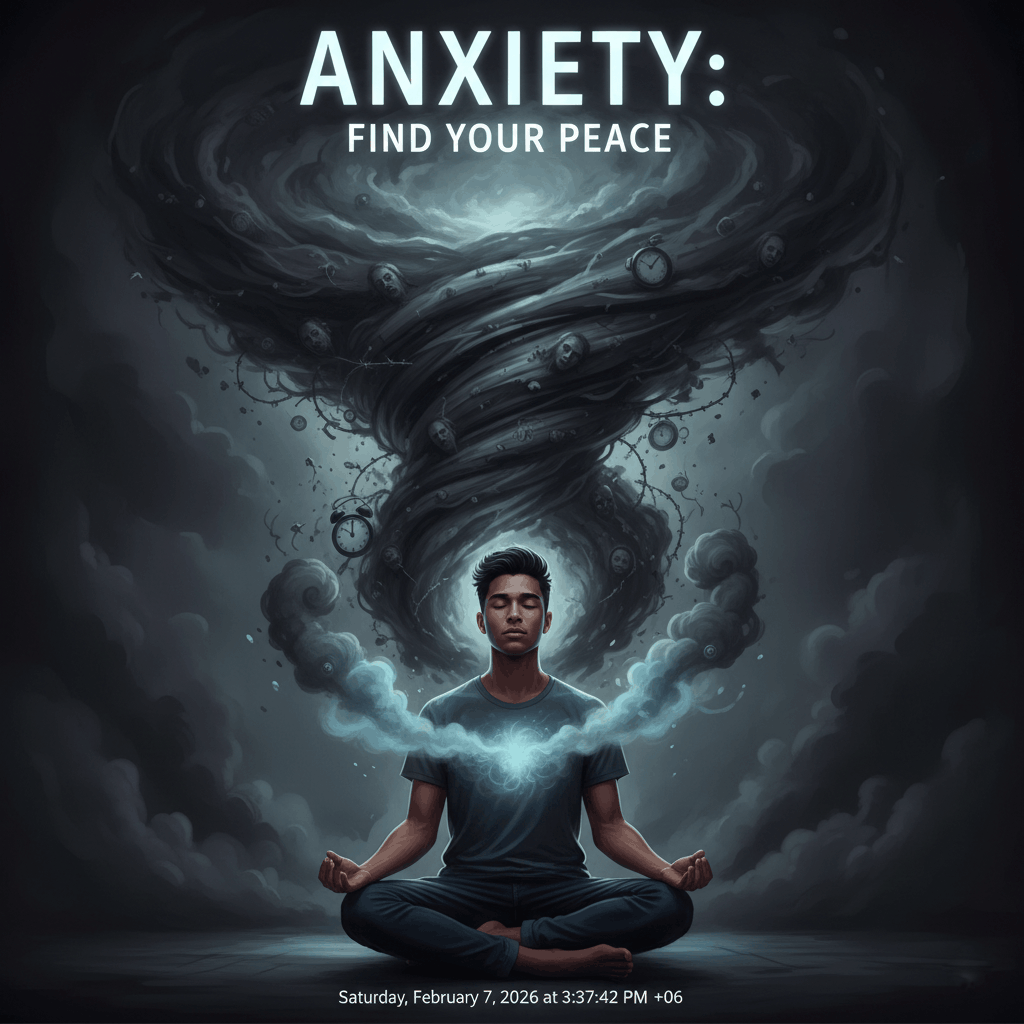
Have you ever felt a sudden knot in your stomach before a big presentation? Or maybe you’ve spent a sleepless night worrying about something that hasn’t even happened yet? If so, you’ve experienced Anxiety.
In today’s fast-paced world, anxiety has become incredibly common. Between work deadlines, family responsibilities, and the constant hum of social media, it’s easy to feel overwhelmed. But here’s the thing: many people suffer in silence because they don’t fully understand what’s happening to them.
Anxiety isn’t just “thinking too much.” It is a real mental and physical experience that can affect every part of your life. In this guide, I want to talk to you—person to person—about what anxiety really is, how to spot the signs, and most importantly, what you can do to feel better.
What Exactly is Anxiety?
At its core, anxiety is your body’s natural response to stress. It’s a feeling of fear, dread, or unease. In small doses, it can actually be helpful—it keeps you alert and helps you prepare for challenges.
However, if those feelings:
- Stay with you for a long time.
- Start interfering with your work, studies, or relationships.
- Pop up for no specific reason at all.
Then, it might be more than just “normal stress.” It could be an anxiety disorder. Think of it like a smoke alarm that’s too sensitive—it starts ringing even when there’s no fire.
Why Does Anxiety Happen?
There isn’t just one single cause for anxiety. It’s usually a combination of things. Some common triggers include:
- High Stress: Whether it’s from work, school, or a personal crisis.
- Lack of Sleep: When your brain is tired, it struggles to regulate emotions.
- Major Life Changes: Moving, changing jobs, or losing someone close to you.
- Genetics: Sometimes, it just runs in the family.
The important thing to remember is that it’s not your fault. It’s a health issue, not a character flaw.
Recognizing the Signs (Mind and Body)
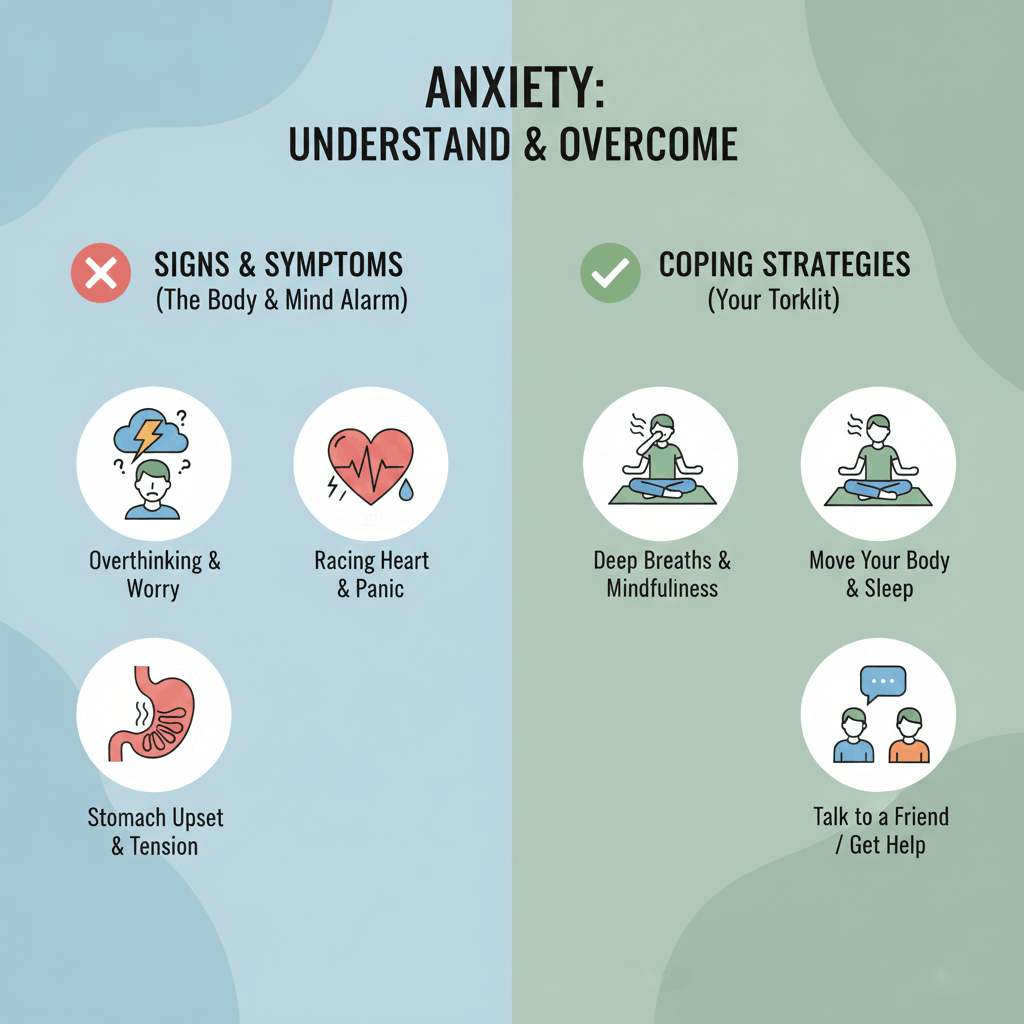
Anxiety doesn’t just stay in your head; it travels through your entire body. Here is how it often shows up:
The Mental Signs:
- The “What If” Loop: Constantly worrying that something bad is about to happen.
- Brain Fog: Finding it hard to concentrate because your mind is racing.
- Irritability: Feeling “on edge” or snapping at people more easily.
- Restlessness: Feeling like you can’t sit still or relax.
The Physical Signs:
- The Racing Heart: Feeling your heart pound in your chest for no reason.
- Shortness of Breath: Feeling like you can’t get enough air.
- Dizziness or Sweating: Suddenly feeling lightheaded or getting clammy hands.
- Stomach Issues: Butterflies, nausea, or that “sinking” feeling in your gut.
Is Anxiety a Sign of Weakness?
Let me stop you right there. No, it is not. Anxiety is an illness, just like a fever or a broken bone. It can happen to the strongest person you know—your boss, your favorite athlete, or your best friend. Admitting you’re struggling isn’t a sign of weakness; it’s actually the first step toward becoming stronger.
Practical Ways to Manage Anxiety
The good news is that anxiety is treatable. You don’t have to feel this way forever. Here are some simple, human steps you can take starting today:
1. Acknowledge Your Feelings
Don’t fight the anxiety. When you try to push it away, it often pushes back harder. Instead, try saying to yourself: “I’m feeling anxious right now, and that’s okay. This feeling is temporary.” Accepting the feeling takes away some of its power.
2. The Power of the Breath
When you’re anxious, your breathing becomes fast and shallow. By forcing yourself to take slow, deep breaths, you tell your nervous system to calm down.
- Try the 4-7-8 technique: Inhale for 4 seconds, hold for 7, and exhale slowly for 8. It works wonders!
3. Prioritize Your Sleep
Anxiety and sleep have a complicated relationship—anxiety keeps you awake, and lack of sleep makes you more anxious. Try to create a “sleep sanctuary.” Turn off your screens an hour before bed and try to stick to a consistent schedule. A rested brain is much better at handling stress.
4. Get Moving
You don’t need to join a gym. A simple 20-minute walk outside can shift your perspective. Physical activity releases endorphins (the “feel-good” chemicals) that naturally lower stress levels.
5. Focus on the “Now”
Anxiety is almost always about the future—things that haven’t happened yet. Try to pull yourself back to the present. What do you see right now? What do you hear? Focusing on your immediate surroundings can help stop a spiral of overthinking.
6. Talk to Someone You Trust
Don’t carry the weight alone. Reach out to a friend, a family member, or a partner. Often, just saying the words out loud—“I’m really struggling with anxiety lately”—makes the problem feel smaller and more manageable.
7. Limit Caffeine and Social Media
Coffee can mimic the physical symptoms of anxiety (racing heart, jitters), making you feel worse. Similarly, social media often makes us compare our “behind-the-scenes” with everyone else’s “highlight reel.” Take a break from both and see how you feel.
When to Seek Professional Help
If your anxiety is making it impossible to live your life—if you’re missing work, avoiding friends, or feeling hopeless—please talk to a professional. Therapists and counselors have incredible tools to help you navigate these feelings. Asking for help is an act of courage.
Final Thoughts
Anxiety can make you feel like you’re on an island all by yourself, but I promise you, you are not alone. It’s a common hurdle, and with the right tools and a little bit of patience, you can get through it.
Be kind to yourself today. You’re doing the best you can, and that is enough.
⚠️ Disclaimer: This article is for general health awareness only and is not a substitute for professional medical advice, diagnosis, or treatment. If you are experiencing a mental health crisis, please reach out to a professional or a local helpline immediately.