Let’s be honest—life these days is a lot. Whether it’s hitting deadlines at work, keeping up with studies, managing family responsibilities, or worrying about the rising cost of living, it feels like we are constantly “on.” If you’re feeling overwhelmed, I want you to know one thing first: You are not alone.
Stress has become a shadow for most of us. While a little bit of stress can actually be a good thing—it can sharpen your focus before a big presentation or give you that extra kick of energy—living in a constant state of pressure is a different story. Long-term stress is tough on the body and even tougher on the mind.
The good news? You don’t always need a prescription or a radical lifestyle overhaul to feel better. Often, the best way to manage stress is through small, intentional habits. In this guide, I’m going to walk you through some simple, human-centered ways to lower your stress and start enjoying your life again.
What Exactly Is Stress (and Why Does It Happen)?
Think of stress as your body’s built-in alarm system. It’s a natural reaction to a challenge or a demand. When you face a tough situation, your body releases hormones that prepare you to either “fight” or “flee.”
In the modern world, we aren’t usually running away from predators, but our bodies react to a “Late Rent” notice or a “Passive-Aggressive Email” the same way they would to a tiger. Common triggers include:
- Work Overload: Too many tasks, too little time.
- Lack of Sleep: When the brain is tired, everything feels 10x harder.
- Financial Worries: Uncertainty about the future.
- Social Pressure: Trying to balance family, friends, and social expectations.
We can’t always change the world around us, but we can definitely change how we respond to it.
1. Just Breathe (Seriously, It Works)
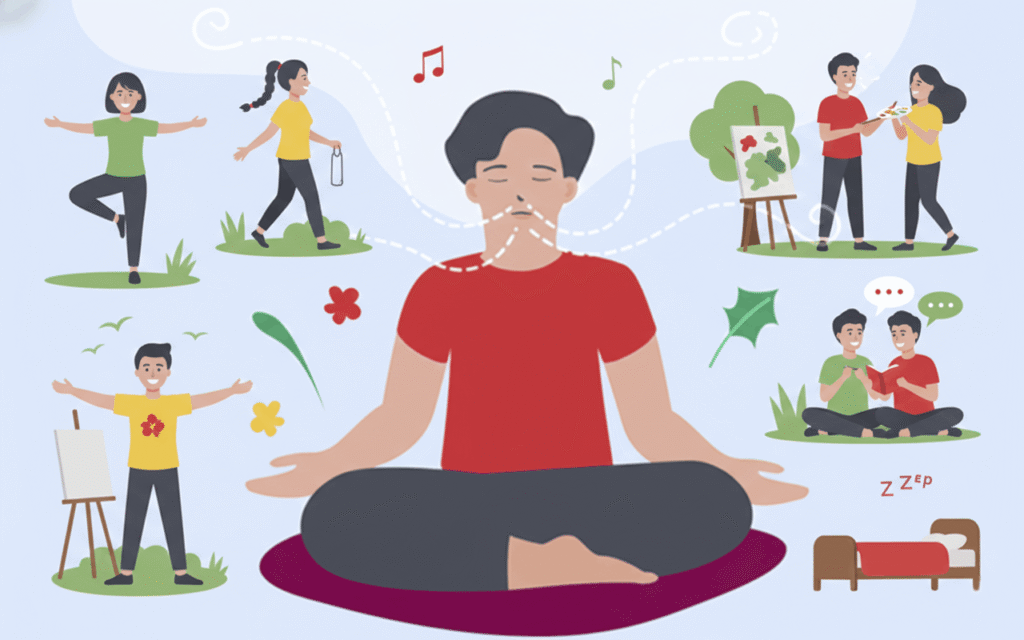
It sounds almost too simple, doesn’t it? But deep breathing is one of the fastest ways to “hack” your nervous system. When we are stressed, our breathing becomes shallow and fast. This tells your brain, “We are in danger!”
By consciously taking slow, deep breaths, you send a signal to your brain to calm down.
- Try this: Inhale for 4 seconds, hold for 4, and exhale for 6. Within minutes, your heart rate slows down, your muscles loosen, and that “tight” feeling in your chest starts to fade.
2. Get Your Body Moving
I’m not saying you need to run a marathon. But regular physical activity is a massive stress-buster. When you exercise, your body releases endorphins—those “feel-good” chemicals that act as natural painkillers and mood lifters.
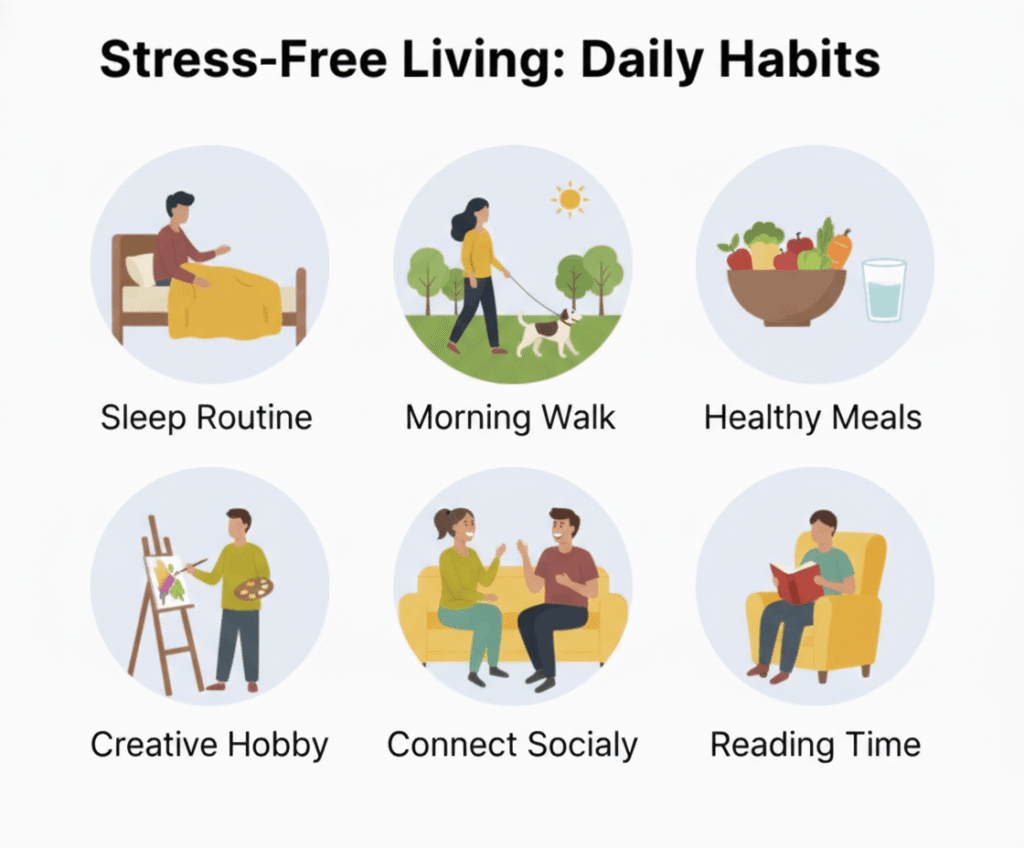
Whether it’s a 20-minute brisk walk in the park, a quick yoga session in your living room, or just dancing to your favorite song, movement clears the mental fog. Plus, it helps you burn off that restless “nervous energy” that stress creates.
3. Prioritize Your Sleep
Sleep is the foundation of mental health. Think of your brain like a smartphone; if you don’t plug it in at night, it’s going to die the next day.
When you’re sleep-deprived, your patience is thin, your focus is gone, and even minor inconveniences feel like disasters. Try to stick to a schedule: go to bed and wake up at the same time every day. A well-rested brain is a resilient brain.
4. Master the Art of the “Micro-Break”
Many of us have the habit of grinding through 8 hours of work without stopping. This is a recipe for burnout. Your brain needs a “reset” every hour or so.
Take a 5-minute break. Step away from the screen. Stretch your legs. Grab a glass of water. These tiny gaps in your day prevent stress from building up like a pressure cooker. You’ll find that when you sit back down, you’re actually more productive than if you had powered through.
5. Carve Out “Me Time”
In the hustle of taking care of kids, bosses, and parents, we often put ourselves at the very bottom of the priority list. Taking time for yourself isn’t selfish; it’s maintenance.
What makes you feel like you?
- Listening to a podcast or music.
- Reading a book that has nothing to do with work.
- Spending time in nature.
- Engaging in a hobby like painting, cooking, or gardening.
Even 15 minutes of doing something purely for joy can reset your mood for the entire day.
6. Stop Trying to Control the Uncontrollable
A lot of our stress comes from “What Ifs.” What if the economy crashes? What if people don’t like my work? Overthinking things that are out of your hands is an exhausting cycle. Try to focus on the “Now.” Ask yourself: Is there anything I can do about this right this second? If the answer is no, give yourself permission to let it go. Focus your energy on what you can control—your actions, your reactions, and your self-care.
7. Fuel Your Body Right
What you eat affects how you feel. While it’s tempting to reach for sugary snacks or a fifth cup of coffee when you’re stressed, these things actually cause your energy to crash later, making the stress worse.
Drinking enough water and eating balanced meals helps stabilize your blood sugar. When your body feels physically stable, your mind follows suit.
8. Talk It Out
Don’t go it alone. We humans are social creatures. When we bottle up our feelings, they grow heavier.
Call a friend, talk to a sibling, or vent to a partner. You don’t even necessarily need them to “fix” your problems; just the act of putting your stress into words can make it feel manageable. Often, a fresh perspective from someone else can help you see a solution you missed.
9. Set Boundaries with Social Media
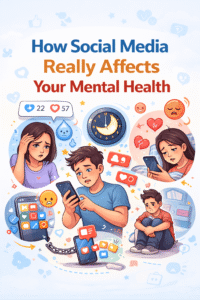
Social media is a double-edged sword. While it keeps us connected, it also subjects us to the “comparison trap.” We see everyone else’s “highlight reel” and feel like our lives are messy or failing.
If scrolling makes you feel anxious or inadequate, it’s time for a digital detox. Set a timer, mute accounts that make you feel bad, and remember: your worth isn’t measured by likes or filtered photos.
10. Know When to Ask for Professional Help
Sometimes, stress is too heavy to carry alone, and that’s okay. If you feel like you can’t function, or if your anxiety is persistent and overwhelming, please reach out to a professional.
Seeing a therapist or a counselor isn’t a sign of weakness—it’s an act of bravery. It shows you are taking your health seriously.
Final Thoughts
Stress is a part of life, but it doesn’t have to be the whole story. By incorporating these small changes—breathing deeper, moving more, and being kinder to yourself—you can navigate the pressures of life with a bit more grace and a lot more peace.
Remember, you don’t have to change everything overnight. Just pick one thing from this list to try today. You’ve got this!
⚠️ Disclaimer: This article is intended for general informational and educational purposes only. It is not a substitute for professional medical advice, diagnosis, or treatment. Always seek the advice of your physician or a qualified mental health provider regarding any medical or psychological condition.