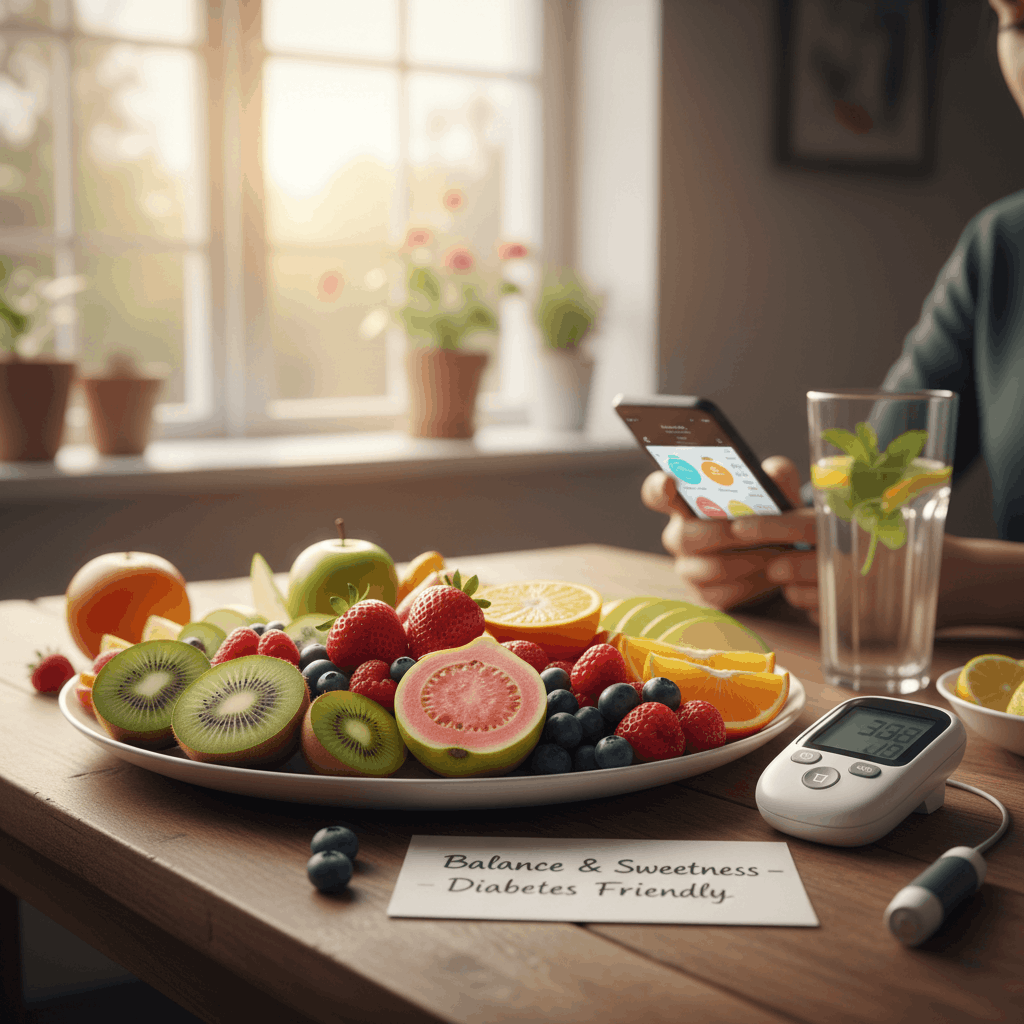
Living with diabetes is all about balance, especially when it comes to what you eat. One of the most common things people ask is: “Can I still enjoy fruit?”
For a long time, there was a big myth that if you have diabetes, you have to say goodbye to fruit forever. But that’s just not true. Fruits are packed with vitamins and fiber that your body actually needs. The secret isn’t cutting them out—it’s knowing which ones to pick, how much to eat, and when to eat them.
Why Fruit is Actually Good for You
Fruits aren’t just “sugar bombs.” They are loaded with fiber, which is a lifesaver for people with diabetes. Why? Because fiber slows down how fast sugar enters your blood. So, instead of a scary sugar spike, your body gets a steady flow of energy. Plus, the antioxidants in fruit help keep your heart and immune system strong.

The Best “Safe” Fruits for Diabetics
If you’re looking for fruits that won’t mess with your blood sugar too much, these are your best friends:
- Apples: They are high in fiber and keep you full for a long time. Just make sure to eat the skin!
- Guavas: These are amazing for diabetes. They are very high in fiber and low in sugar.
- Pears: A small or medium pear is a great, slow-digesting snack.
- Oranges: Skip the juice and eat the whole orange. The fiber in the fruit makes a huge difference.
- Berries: Strawberries and blueberries are like nature’s candy but without the sugar crash. They are full of antioxidants.
- Papaya: It’s great for digestion, but keep your portion size moderate.
- Kiwi: Full of Vitamin C and very “friendly” to your blood sugar levels.
Fruits to Be Careful With
You don’t have to ban these, but you should definitely watch your portion sizes. These fruits have more natural sugar:
- Mangoes: They are delicious, but very sweet. Try to stick to just a small slice.
- Bananas: A small, slightly green banana is better than a big, very ripe one.
- Grapes & Lychees: It’s easy to eat too many of these. Limit yourself to a small handful.
5 Simple Rules for Eating Fruit Safely
To keep your blood sugar in check, follow these easy tips:
- Portion Control is Key: Don’t eat a giant bowl of fruit at once. Small servings are much safer.
- Whole Fruit > Juice: Always choose the whole fruit. Fruit juice has no fiber, which means the sugar hits your blood instantly.
- Don’t Eat Fruit on an Empty Stomach: Try eating fruit as a snack between meals or along with some protein (like a few nuts). This keeps your sugar steady.
- Watch Out for Dried Fruits: Dates and raisins are very concentrated in sugar. It’s better to stick to fresh fruit whenever possible.
- Listen to Your Body: Everyone is different. Use your glucose monitor to see how specific fruits affect you personally.
Internal Linking Ideas for Your WordPress Site:
- Check out our [Healthy Meal Plan for Diabetics].
- Read more on [How Fiber Helps Control Blood Sugar].
Final Thoughts
Having diabetes doesn’t mean you have to miss out on the natural sweetness of fruit. By picking high-fiber options like apples or guavas and keeping an eye on your portions, you can stay healthy and satisfied. Remember, it’s not about being perfect—it’s about being smart with your choices.
Disclaimer: This guide is for sharing information. Always check with your doctor or a nutritionist before making big changes to your diet.