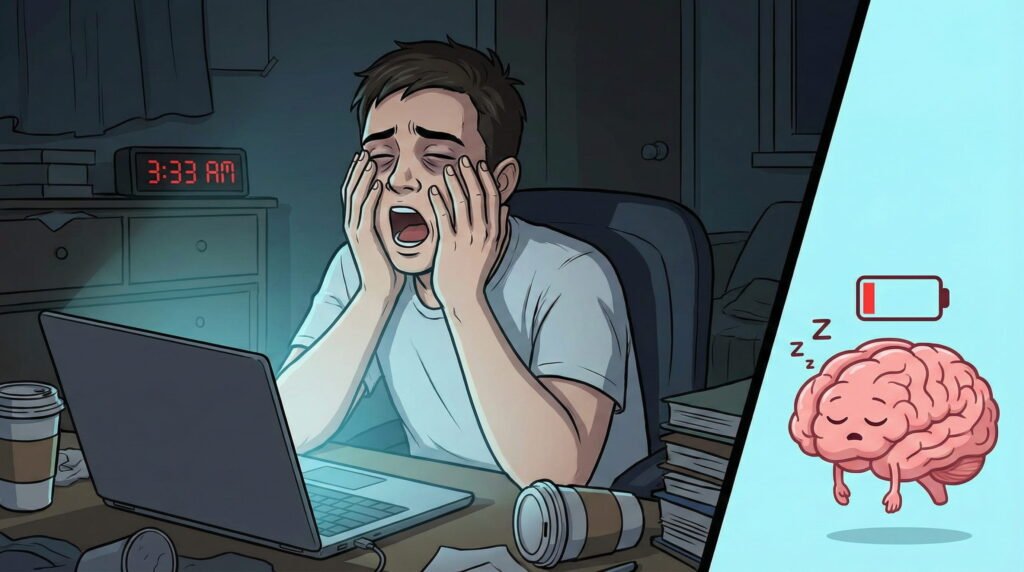
Sleep is weird. It’s the one time where you do absolutely nothing, yet it is essential for doing everything.
In my practice, I often hear patients say, “Doctor, I’ll sleep when I’m dead,” or “I just don’t have time to sleep.” We live in a hustle culture where sacrificing sleep is often seen as a badge of honor. But as a medical professional, I can tell you that skipping sleep is one of the most damaging things you can do to your body.
Food and water are essential for survival, and so is sleep. When you sleep, your body isn’t just shutting down; it is busy repairing cells, clearing out toxins from the brain, and consolidating memories.
If you have been cutting corners on your rest—whether due to work stress, a crying baby, or just scrolling through social media—here is exactly what is happening inside your body.

1. You Feel Constantly Drained (Fatigue)
This is the most obvious one, right? But it goes deeper than just yawning.
When you miss out on quality sleep, your body doesn’t get the chance to recharge its energy stores. You start running on “fumes.” Simple tasks like cooking, driving, or even answering emails feel like climbing a mountain. This chronic fatigue lowers your reaction time, which can actually be dangerous if you are driving or operating machinery.
2. Your Brain Fog Gets Worse
Have you ever walked into a room and completely forgotten why you went there? That’s often a sign of sleep deprivation.
Sleep is when your brain processes what you learned during the day. Without it, your focus drifts. You struggle to pay attention, and learning new things becomes incredibly difficult. It’s like trying to save a file on a computer that has no memory left.
3. You Become Irritable and Moody
We have all been there—snapping at a loved one for no good reason after a bad night’s sleep.
Lack of sleep messes with your emotional regulation. It makes you shorter-tempered and less patient. You might find yourself feeling angry or frustrated over small things that wouldn’t normally bother you. It’s not just “waking up on the wrong side of the bed”; it’s a physiological reaction to exhaustion.
4. Anxiety and Stress Levels Spike
There is a strong link between sleep and mental health. When you are sleep-deprived, your body produces more cortisol (the stress hormone).
This puts your body in a constant state of “fight or flight.” You might feel anxious, jittery, or overwhelmed. Over time, chronic sleep debt can lead to long-term mood disorders like depression and severe anxiety.
5. Your Immune System Weakens
If you feel like you are catching every cold or flu that goes around, look at your sleep schedule.
While you sleep, your immune system releases proteins called cytokines, which help fight infection and inflammation. If you don’t sleep enough, your body produces fewer of these protective soldiers. Essentially, you are leaving your body’s fortress unguarded against viruses.
6. Unexplained Weight Gain
This is one of the most surprising facts for my patients. They often ask, “I’m eating right and exercising, so why am I gaining weight?”
Sleep controls two key hunger hormones: Ghrelin (which tells you to eat) and Leptin (which tells you to stop). When you are tired, Ghrelin spikes and Leptin falls. This is why you crave high-sugar, high-carb snacks late at night. Your brain is desperately looking for quick energy to keep you awake.
7. It Hurts Your Heart
Sleep is essential for a healthy heart. During deep sleep, your blood pressure naturally drops, giving your heart and blood vessels a much-needed break.
If you stay awake, your blood pressure stays higher for longer. Chronic sleep deprivation is linked to higher risks of hypertension (high blood pressure), heart disease, and stroke. Prioritizing sleep is prioritizing your heart.
8. Blood Sugar Issues (Diabetes Risk)
You don’t need to be overweight to develop Type 2 diabetes; lack of sleep is a risk factor on its own.
Sleep deprivation affects how your body processes glucose. It makes your cells more resistant to insulin, meaning your blood sugar levels can rise higher than normal. For those who already have diabetes, a good night’s rest is just as important as diet and medication.
9. Your Skin Starts to Age Faster
They call it “beauty sleep” for a reason.
When you are tired, your body releases more cortisol, which can break down skin collagen—the protein that keeps your skin smooth and elastic. This leads to fine lines, dark circles under the eyes, and lackluster skin. No amount of expensive cream can replace the glow of 8 hours of rest.
10. Long-Term Health Risks
If the immediate effects aren’t scary enough, the long-term ones should be. Chronic lack of sleep has been linked to serious conditions like obesity, heart disease, and even cognitive decline like Alzheimer’s disease later in life.
How Much Sleep Do You Really Need?
While everyone is different, the general medical consensus is:
- Adults: 7 to 9 hours per night.
- Teenagers & Kids: They need even more to support growth.
Doctor’s Tips for Better Sleep
If you are struggling to doze off, try these simple hygiene hacks:
- Stick to a Schedule: Go to bed and wake up at the same time every day (yes, even on weekends).
- Ditch the Blue Light: Put your phone away at least an hour before bed. The light tricks your brain into thinking it’s still daytime.
- Watch Your Drinks: Avoid caffeine and alcohol late in the evening.
- Create a Sanctuary: Keep your bedroom dark, cool, and quiet.
Final Thoughts
Sleep isn’t a luxury; it’s a biological necessity. It is the foundation of your health. If you want to be more productive, happier, and healthier, the answer might just be closing your eyes a little earlier tonight.
⚠️ Medical Disclaimer: The content in this article is for informational purposes only and is not intended to be a substitute for professional medical advice, diagnosis, or treatment. Always seek the advice of your physician regarding any medical condition.